Showing posts with label genre. Show all posts

Saturday, March 9, 2013

Writing as Act of Discovery

All---

One of the questions that is frequently posed to authors is, "Why do you write the stories you write?"  If you dig into past posts on this blog, you'll see that this is a question that I've wrestled with a lot.  I often deal with darkness that makes me uncomfortable.  I struggle with finding the balance between exploring evil and celebrating it as a form of entertainment.  I question the appropriate use of profanity, violence, or psychological torment as part of my literature.  I often write things that the people I care about most not only would rather not read but might be negatively impacted by if they were to read them.

So, why?

A friend who has only recently begun reading some of my writing recently asked me that question.  Because she was a friend, who understands my own psychology more than general readers would, I knew that she was asking more than just a variation, "How do you come up with the stories you come up, and why do you choose to write the ones you do?"  She was asking why, given the afore-mentioned struggles and challenges, I so often push ahead into writing the dark, twisted fiction that I do.

The answer I gave her on the spot was essentially a longer version of this, and I still think it's true:

I write about the kind of people that I encounter in life and that I cannot understand, and the kind of experiences that I brush up against and cannot comprehend.

She then asked a spot-on follow-up question: "Does it work?"

After laughing, rolling my eyes at myself, and pursing my lips thoughtfully, I gave an answer that can be boiled down to this:

Sometimes.  It's getting there.  It's a long process.  But sometimes, yes.  At least a little bit.

I could tell that this dissembling answer cut some of the credibility out of my first answer.  My friend didn't press it too much, but I could tell she noticed that too.  So I've been pondering this again, even as I work on my novel and write some minor flash fiction.

A more full, if philosophically arch, answer came to me today as I was working on some critical revisions to my novel Sublimation.  Without getting into too many details, I'm trying to ensure that my main characters aren't too elusive.  It was a criticism that I could not refute, and I've been making great headway in reinforcing the early character development to eliminate that elusiveness.

While working on that, though, it struck me that I like elusive main characters, because for me the moment a character is understood, the story is over.

Seeing this clearly was a new realization for me. My interest as a writer and a reader is less about character development, per se, than it is about character realization.  Perhaps they work out similarly much of the time, but I am less drawn to a traditional character development arc where Tom starts out as A and progresses through a stage of B to become C at the end of the third act. I am for more drawn to an arc of discovery, in which Tom's essential core character is revealed through a spiral-like process of interpersonal articulations  brought about my active plot points.

In other words, it's like a facial reconstruction.   When you start out with a skull and you end up with a sculpture, you are not creating a new person; you are revealing the person that was there all along.
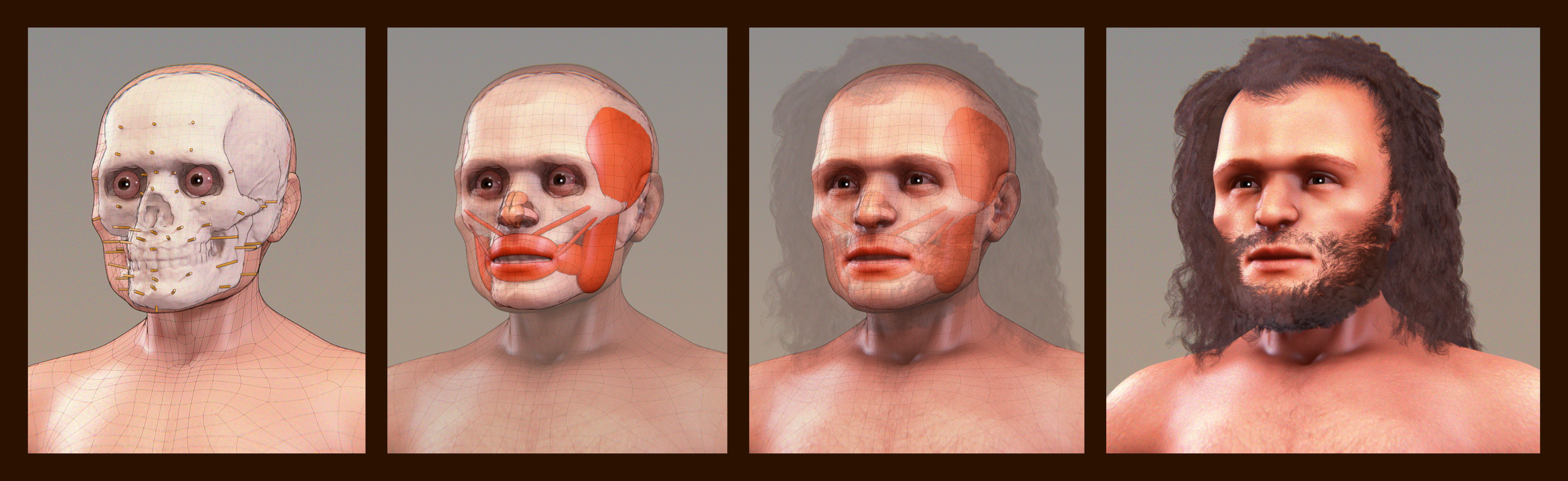

At first, I thought this was the new answer to the question, but it didn't seem complete.  As I thought about it, I realized that when I write, what's happening is something the action of Hegelian Spirit. It's self-discovery by  discovering the other and realizing that I am not that.

In other words...

Why do you write what you do?

In large part, I write what I write so that I can reveal a character and know, when it is done, that I am not that character.

I'll leave the further psychological analysis of that to others.

.Nevets.

Monday, April 2, 2012

All---

"It can be difficult to aspire towards someone's quality without thinking you need to mimic their qualities."

I said that on twitter today. It might be something someone else has said. I'm not sure. I just know it reflects an occasional struggle of mine as a writer. There are many writers whom I admire for one reason or another. In a very general sense, I hope to be writers like them. Because I am a top-down thinker, this often means that I start with that vague sense of how good they are and deduce from it all the particulars that must somehow go into that quality. That's a perilous path, for it leads to comparisons that ultimately have less to do with the big-picture quality of the writing and more to do with specifics of style.

Within my own genre, over the past year, I have been particularly struck by the work of four different authors: award-winning standouts RJ Ellory and Ryan David Jahn, and newcomers Michelle Davidson Argyle and Jennifer Hillier. Each one exemplifies something that I would to achieve, but each one is very different from one another, and very different from my own work. Ellory's writing broods and relishes in the moment. Jahn takes brooding and turns it into physical and emotional violence that pushes each moment into the next. Argyle writes with the soft touch of a poet. Hillier's novel Creep moves like a thriller that lives messy, streaky fingerprints in its wake.

As much as I admire these writers' craftsmanship, and even those specific attributes, my own writing is very different. Ellory's writings feels, for all its exploration of American culture and history, like it has deep European roots. Jahn has a neo-noir flair. Argyle comes to genre writing from the literary world. Hillier's work reflects contemporary American thriller-writing with all its cross-media influences. My own writing is grounded in the shades-of-grey action thrillers of Jack Higgins (The Savage Day) and the fast-clip conspiracy novels of Robert Ludlum (Chancellor Manuscript) and plays in the surrealistic, philosophical world of Chuck Palahniuk (Fight Club, Choke). 

As a result, my fiction runs at a face pace, and gets bogged down if I try to force too many lingering moments. Violence is part of the context and setting, rather than a propulsive force. My descriptions are clean-cut and matter-of-fact, and my arch language owes more to philosophy than to poetry. If the end result is like non-written media, it's far more like Japanese suspense drama than it is like CSI or Law and Order: SVU.

What I often need to remind myself is that it's not those specifics that I need to strive towards. What I want to be is fearless. I want to write evocatively and effectively. I hope that my readers feel a rush of adrenaline, and then stop to think. I hope that my readers feel the darkness, and grasp for the little fragments of light shining through. In their own way, these broad characteristics are part of what mark Ellory, Jahn, Argyle, and Hillier as quality. These are things toward which I can strive without sacrificing my own unique style and voice. These are measuring sticks that are independent of context and individual technique.

This isn't a writing thing. This is a living thing. Whatever your goals are. Whoever you want to be. Whatever you want to achieve. Aim for quality. Work with your own qualities.

.Nevets.

Thursday, July 7, 2011

What's an Archaeological Thriller? Chime in!

Archaeologists at work in Sweden
All---

In case you missed it, yesterday I posted about the Top Ten Things You Never Knew About Archaeology.  In reply, historical mystery author Gary Corby asked if I'd given thought to writing an archaeological thriller.  I have, and I mentioned that.

I've been thinking about it since then, and I think one of the reasons I haven't written one yet, is that I'm not quite sure what an archaeological thriller would look like.  Would it look like Indiana Jones -- or would it look like John Darton's Neanderthal?  Would archaeology inform a prehistorical context, or would it provide the vehicle for the narrative.  Would the hero be like bioarchaeologist Temperance Brennan or like aquatic treasure-hunter Dirk Pitt?

I really don't know.

So I'm curious.  I'd love to hear what you all think.  What would constitute an archaeological thriller?  When you hear the phrase, what, if anything, pops into your mind?  I'd love to hear from everyone!

.Nevets.


Monday, June 27, 2011

MC Escher's Evil Identical Cousin Cathy

"Waterfall"
by Andrew Kepert
All---

I don't have time to catalog all the writing myths I've run into over the years.  I don't even have an interest in doing so right now.  But here's one that I think is especially pernicious because it just makes so much sense that it resonates without explanation: write what you like to read.

I'm not disputing the value of being familiar with and well read in the genre you're publishing in.  I think even that can be made a little too much of, but I have experienced its value first hand so I at least get it.

But that's not the same as writing what you like to read.  New writers sometimes ask, "I want to write, but I'm not sure what to write."  Developing writers sometimes ask, "I feel like I should settle on a genre for this story, but I'm not sure which."  Readers sometimes ask writers, "How did you decide what to write?"  And too often the answer is, "Write what you like to read."

But, as the saying going, here's the thing.  I read sci fi.  I read westerns.  I read mysteries.  I read fantasy and historical fiction.  I read literature with very internal story lines.  I read spy thrillers and psychological suspense.  Most of the time, what I read isn't telling the stories I want to tell.  Most of the time, authors I read aren't telling the stories in the way I would.   When I'm writing I take human psychology, brutally force it through a sieve that distorts reality, and then chunk it violently together with philosophy.

And every time I try to step away from my role as Escher's verbal dark side, the stories break.  They don't work.  They don't click.  No matter how much I might appreciate the story if told another way.

Truth be told, I'm already reading people who tell the stories I want to read.  I'm telling stories to tell them, not to read them.  And, strangely, in the end, I don't like stories that I write how I might like to read them.  But I love the stories that I write how I like to tell them.

And so, when I want to tell an existential story about the need to matter, it includes a shotgun and a man in a chicken suit ("The Best Medicine," Genre Wars).  When I want to write a story about coping with death, it centers on a forensic anthropologist reveling in gore ("Death, Be Not Me," Genre Wars).  When I want to tell the sweet love story of a man breaking free of isolation, its course runs through the imagery of serial killing and dead insects ("Terminal Instar," Notes from Underground).  When I want to tell the story of the two-edged sword that is heritage, I take a main character with an attitude problem and throw a ticking bomb in his pocket ("Kansai Oniisan," Stores for Sendai).

And when I try to write about the human struggle for patience in a busy world, employing airport observations as partial metaphors (see my last blog post), it doesn't click until I wrap it around a revenge plot turned mercy killing.

So here's my verdict:

Write the story you want to tell, and write it the way you want to tell it -- and the way only you can.


.Nevets.


p.s. Someday maybe I will take a stab at what, "and the way only you can," means.

Wednesday, March 30, 2011

How the Nothing Ate the Western and is Coming for Your Genre Next

All---

I've made no secret of the fact that among my projects is a Western short story, hopefully the first of a series featuring circuit-riding lawyer Solomon Matthews, called by some the Death Reader because of his ability to interpret the facts of a person's demise from close inspection of the remains.   I've also freely admitted that the Western is, as a genre, a bit of a no-go in the publishing world these days.

The reasons for this are many.  Some of it has to do with writers.  Some to do with publishers.  Some to do with simple trends in taste.  But I think the Western has also been attacked by Bastien's Scourge, Atreyu's Bane, the Mocker of the Princess: The Nothing.

At its core, Western fiction is myth.  It is the American equivalent of wu xia fiction or medieval European ballads: larger than life tales of adventure in a romantic past, told in part to stir and inspire the human spirit and in part to cause general reflection.  They are part fairy tale, part parable, part diversion.

Unfortunately, as such, the Western has suffered greatly from the development of a readership that knows better.  By and large, the American people have traded in their sense of wonder for their sense of guilt -- their imagination for their intellect.  The Western doesn't take place in American history; it takes people in Fantasia.  And Fantasia is dying.

One of the first knocks on the Western was a generalized sense of guilt over the treatment of non-whites in American history.  To be sure, many dime store Westerns reflected stereotypes of cowboys versus Indians and relegated  Asians to the laundry and African Americans to ... well, nowhere.  To be equally sure, many Westerns have risen above those stereotypes to portray a much more diverse West.

Unfortunately, the second knock on the Western attacked both the stereotypical portrayals and many of those which showed alternatives.  It attacked with a resounding, "That wasn't what it was like."  Many readers rejected the very idea of showing anything other than "The West the way it really was."  Unfortunately, none of the readers in the late 20th century were particularly active during the Civil War or reconstruction era, and so they were inclined to reject any portrayal.

And this has led into the third knock on the Western: in order to satisfy readers, they should be specifically and factually accurate.  In order to navigate general frustrations with the genre, it's easiest to find simply demand historical accuracy.  If the facts are accurate, the idea goes, then the story will feel more true.

And so the Western has largely split into two streams: that which includes contemporary cowboy romance stories, and that which has merged with historical fiction.  Unfortunately, neither of those strands really allows the Western to function as myth.  By being anchored to real places, real times, and real people, the story has lost its transcendence.

I don't mean to make the Western sound lofty by speaking of its transcendence, but one of the important qualities of mythic literature is often that it rises above and exists outside of a particular time and place.  Fable and fairy tales, wu xia and Western -- they cannot tell timeless stories of the human spirit if the most important thing about them is their factual content.  They may still be good stories, but their not the same stories.

And if you're the writer or reader of another genre, don't feel safe.  Science Fiction is criticized if its science smacks of magic or techno-babble.  The police procedural, the forensic detective, and the legal thriller have largely supplanted the traditional mystery, and the contemporary cozy is gritty and real.  Fantasy editors beg for fantasy that doesn't include dragons, talking animals, or questing elves.

I'm as guilty as anyone of this.

And I mourn the loss of my sense of wonder every day.

But I can do things about it.  I can write psychological suspense that communicates realistic human experience within a surreal context.  I can write Western fiction that, while perhaps still darker and more fact-driven than I would like, is not concerned with time or place or history.  I can try to kick myself in the teeth every time I cringe at the science on Star Trek or goofy design of the BBC Narnia miniseries.

The Nothing has eaten the Western.

But Fantasia can still be saved.

If anyone really wants to.

If you want to protect your genre.  If you want to protect fiction and stop the march from story-telling to ripped-from-the-headlines. If you want to protect wonder.  If you want to protect imagination itself.

All you have to do is say her name.

.Nevets.

Wednesday, February 16, 2011

Aliya Whiteley: You're Not Always Brilliant

All---

Most writers know the sting of criticism.  We know it's going to come.  When we believe in our writing, we also want to believe in everything we've written.  Historical fiction novelist Deborah Swift has talked here about the importance of developing a thick skin.  As avant-garde blackly comic crime author Aliya Whiteley discovered, though, that no matter how good a writer you are, you need to be open to criticism.  You can be a good writer and still need to change what you're currently writing:


Before I was a crime writer I was a sci-fi writer. Before that, when my first novella was published, I was an experimental writer. And before that I was a writer of terrible romances.

I'm glad to say this romantic claptrap stage did not last long, but it did give birth to three particularly ugly manuscripts which I'm determined to keep locked up in a cupboard forever-more. But writing terrible romances taught me a lot about pace, and structure, and character; the form of the romance novel is not flexible, so I learned the craft of telling a story in which the hero must kiss the heroine by chapter two and they have to have moved on to at least third base by the end of novel, while having some sort of reason to keep bumping into each other that doesn't overshadow the kissie bits.

One of these horrible efforts actually made it to the acceptance stage. Caught By The Cougar (I told you it was terrible) got picked up by a brand new E-Book publisher back in the days when nobody bought E-Books. And a professional editor got her mitts on my ugly baby. She ripped it to shreds, and rightly so, but boy, did it hurt. I seriously considered ignoring her thousands of comments - after all, I had written a book and someone was going to publish it, so it had to be brilliant already, right? - but in the end, common sense overcame my ego and I got down to the business of making all my passive sentences active, and taking out most of the awful adverbs, and tightening up the pace where it flagged, and slowing it down when the hero and heroine got to the making out stage. I learned a huge amount from that experience, and I am undoubtedly a better writer because of it. I spent months making changes, and at the end of it, I had a book that wasn't bad. It still wasn't good, but it wasn't bad. Of course, my careful editing took so long that by the time I returned the manuscript the E-publisher had already folded.

When someone really criticises your baby, you want to put your hands over your ears and pretend that they're an idiot who didn't understand the first thing about your writing. But learning to be open to criticism and to act on it when necessary - this is what turns an amateur into a professional, I think. It's a painful process. But I'm glad I went through it.

I'm also glad it was never published. But that's a retrospective gladness.

Aliya Whiteley


Aliya Whiteley is the author of Three Things About Me and Light Reading, both also available in the US after-market.  Light Reading is also available on Kindle.


Sunday, January 23, 2011

Writing in One Genre? Why Limit Yourself?

All---

If you've spent much time at all in the writing blogosphere, you've doubtless run into writers' struggling with balancing the desire to write in multiple genres with what seems like sensible advice to pick one and settle into it while establishing your career.  I've blogged on it multiple times, sometimes referring to the selected genre as a pigeonhole, of all things.  Recently, middle grade author Alex MacKenzie did a guest-spot on the Literary Lab, in which she referred to her writing as as, at a minimum, a two-trick pony; and Michelle Davidson Argyle, author of literary fantasy and literary thrillers, said she felt like she was defying her own good sense.

Very often the gut response by authors and those who support and encourage is, "Why limit yourself?"  Or, more expansively, something along the lines of, "You have so many great ideas, why limit your own creative energy or the experiences of your readers by confining yourself to only one genre?"

I don't intend to give guidance any to any individuals in this post, because I think genre choice is a very personal decision and different authors can and should go about approachingit very differently for themselves.  That said, I would like to respond to this one notion -- "Why limit yourself?"

As you know, I've done just that.

I am an author of psychological suspense and short, character-driven literary fiction -- but my interests are incredibly diverse.  I have not only a general desire to write in other genres, but some specific goals that will never be met without some dabbling in other genres, and a handful of very specific projects ideas in other genres.  But, for now, I have limited myself.

And I'm glad I have -- and not just for marketing reasons.  Forget those.  What I want to suggest to you is that, at least for me, I have gained a lot by limiting myself.  I'll strip away the lengthy examples and cumbersome analogies that I normally work with and just give you the hit list.  Some of this might be obvious, but others I think are a little less so.

  • It has given some focus to my reading, so that I am really familiar with the genre of the book I am writing.  This helps me know what techniques are common, what cliches to avoid, what's taken for granted, and what's a little risky.
  • It has given more focus to my networking.  While I  still meet and get to know authors in other genres, I have made some tremendous contacts specifically within my genre because I'm one of them.
  • It has allowed me to really strengthen my writing.  I was a good writer before I chose my genre.  Once I settled into the genre, and my writing brain became more focused, and all my writing projects became centered around that genre and style, my writing has become far stronger and far punchier.
  • It has given me a tool set for answering those questions that inevitably come up when you're writing.  "How should I handle this?"  "What's most important here?"  "How do I want to structure this?"  "What should the arc of the pacing be like?"  Oh, right, like psychological suspense.  Because that's what I write.  Simply defining the genre of my book was never as helpful as defining my genre as an author for answering these questions because I could always cop out to, "Well, this is a psychological suspense novel, but I'm just a writer and I have a literary world at my fingertips."
  • It has helped me understand specifically how my book does and does not fit into my genre.  I don't have just a general sense of, "It doesn't really fit perfectly into bookstore shelf-genres."  Because I know my genre, I can point to specific elements that fit or or don't, and I can engage in informed conversation about the decisions I made in those regards.
  • It has encouraged a general discipline in how I approach writing projects.  The fact that I'm not going to allow myself to jump onto a sci fi project or a fantasy project has removed a great deal of the temptation to hop around or waste my mental energy on projects other than the one I'm trying to finish. Delayed gratification is not bad.
  • It has dramatically enhanced my voice.  Part of an author's voice comes from an author's self-identity, and the stronger that self-identity, the stronger and more confident, the more well-developed the authorial voice.
  • It has increased the seriousness of my outlook at my writing.  Lots of people are writers.  Lots of people want to write a novel.  Lots of people write stuff.  I was like that for many years.  Even after I decided I wanted to taking my writing seriously, but the day I determined that I'm an author of psychological suspense and short, character-driven literary fiction, it was really serious.

I'll stop there before this gets unwieldy.  Again, my point isn't to convince everyone that they need to pick a single genre.  You don't have to.  But, if you're a career-track writer, and you're conscious of the marketing concerns, of the pressure to establish an identity for yourself at the outset of your career, but your fans and loved ones keep asking you, "Why limit yourself?" -- maybe this will help you see that it's not all bad limiting yourself.

Bones heal best in restrictive casts.  Children develop best with rules and boundaries.  You can't have a reservoir without a dam.  (Okay, so I couldn't stay entirely away from the terrible analogies.)

Limits aren't always bad.

And they aren't forever.

They're for now.

.Nevets.

Soundtrack to writing this post provided by Ronnie Dio, Faith No More, Dokken, Skid Row, and Queensryche.

Monday, January 3, 2011

The Importance of Fit

All---

Bear with me today.  This is one of those posts that is going to spiral a bit, but I think (given the topic) it's important that I write it as it comes naturally to me.  This is neither a whining post, nor an advice post, though it may seem like both.  I would love any feedback, comments, questions, pointers, sarcasm, or anything else you'd like to offer, though.  I love that Nevets.QST has, over the past year, become more interactive.  I love the exchange of ideas and conversation in the comments almost more than I like the posts themselves. So hang in there and then voice back!

Let me start with the part that will, at first, sound like whining.  Like many writers, and indeed like many others in this world, I am working a day job that I don't particular care for.  In fact, as of last Wednesday, I was already sick to my stomach at the thought of returning to my job today (Monday).   I realize how pathetic that is.  I'm not asking for pity, though.  Because here's the thing -- my job isn't that onerous.  I don't do grueling labor, I don't have a monstrous boss, and for the most part I don't have to engage with venomous clients.  The job is no big deal, really.

So why do I struggle with it?

Because it's a poor fit.

Many of you have probably gathered enough about my personality to understand that I'm not geared for a workroom-type job.  When I first took  my present job, there was a large portion of time spent with clients and amidst the urgency of people's immediate needs.  Over time, the job has transformed into one that keeps me in the workroom most of the time and focusing on long-term projects and technology.  I'm good enough at it, and it's not horrible work.

But it's a poor fit.

I thrive in chaos and I get my energy from interaction with other people.  I work in a realm of ideas and emotions.  Long, step-by-step work literally makes me car sick (seriously).  Facts and figures, mechanics and   measurements are a foreign language to me.  (I was a history major who couldn't do names and dates.  Go figure.)

Now here's the part that might sound like advice: the only reason I'm writing about this is because I've realized increasingly just how important this is in writing, too.    It's not enough to be good at what you're writing.  It needs to be a good fit.  It's not enough to write properly and in a productive way.  You need to write in a way that is a good fit.  It's not enough to find an agent who represents books like yours or a publisher that sells books like yours or a blog that posts stories like yours -- it has to be a good fit.

No matter how good the stories are, if they're not really a good fit for you, it's not going to click, and in the end you're going to feel like writing is a burden and a struggle.  You're going to be struggling with all sorts of ancillary questions about genre and voice and tone and structure and marketability.  Sometimes you're struggling with those questions because your subconscious is looking for an excuse to not write that story in the first place.

So here's the kicker, if you want advice: write something that's a good fit for you, and stop worrying about everything and everyone else.


It's not even about about what you like.  I like a lot of things that aren't a good fit for me.  I loved what I was doing when I was doing forensic anthropology.  But it wasn't a good fit.  I loved the wilderness of Alaska, but as a place to live, it wasn't a good fit.  I love this suit that's hanging in my closet, but it doesn't fit.

When it fits, you not only like it, but you excel at it, you're comfortable in it, the challenges feel like opportunities, and the upsides make up for the downsides.  When it doesn't fit some of those may be true, but others may have to be forced, and at the end of the day you're going to be sick to your stomach about it.

And yet so many of my writing friends try to write things that don't fit them.  Because they're afraid of the consequences if they let it all hang out.  Or because they're afraid no one will like it.  Or because they don't think it's up to snuff.  Or because they think a grown-up shouldn't be writing Young Indiana Jones fan fiction.  Or because no one reads Westerns anymore.  Or because everyone in their crit group tells them that they really are a paranormal romance writer at heart.

If it doesn't fit, you must quit.


But I said this was neither about whining or about giving advice.  And it's not.  What's it about then?

It's about the dang struggle.

Because it's all well and good to say fit is important.  But when you have to pay bills in a down economy, you keep the job that doesn't fit.  And when you're writing, you don't always know what's a good fit.  And sometimes, when you do know what fits, the implications are too crazy to deal with.

Writer of that which is-not-but-perhaps-might-be-or-should-be, Tara Maya advised me recently to write for a world of me's, or to write for a Japanese audience, to write the crazy surreal, wu xia-influenced fiction that I like.  And she was pretty much right.  That would be a pretty great fit in a lot of ways.

But, at the end of the day, I face a pretty mercenary question.  As screenwriter and novelist Ryne Pearson put it: do you want to write about peach pie or do you want to sell books?

But (yes, there's another but) that's a trap, because you're not going to write your best books unless you're writing something that's a good fit.  And if you're not writing your best books, you're not as likely to sell them.  (And, in case you're unfamiliar with Pearson's work, I don't think peach pie would be a good fit for him.)

So what does that mean?  For me, I think it means stop screwing around with all the other stuff and just write a good story.  Check out the conversation that Domey Malasarn started in the Literary Lab blog today.  As he suggested in the initial post, a book does not need to be perfect in its individual elements to be a great book.

Domey talked about plot, character, and prose.  The same goes for everything else.  The word perfect means complete.  What makes a story perfect is that it's everything it can be.

That doesn't happen without fit.

Someday I'll take that advice to heart and write something that truly fits.  But in the mean time, I have a novel to finish.

If you're still with me, I appreciate your endurance.  And I would absolutely love to hear from you in the comments.

.Nevets.

Blue October provided the soundtrack for this post.

Tuesday, November 30, 2010

Mama Said Blog You Out

All---

Don't call it a come back; I've been here for days.

Just not on the internet.

As often happens, the holiday and vacation time came with nearly as many obligations and crises as they did moments of relaxation and enjoyment, and both my writing and my social networking suffered for it.

It's always interesting, though, when I finally get a moment to reflect from a writer's perspective.  Of the crises, a small handful were "real."  (The transmission on my wife's car failed, for instance.)  Most of them, however, were "self-created."  (Frustration over lack of getting done things I wanted to, for example, or facing the bleak specter of returning to work.)

Thing is, the emotional hook is far stronger on the latter sort.  We still don't have the transmission taken care of and are utterly unsure what we're going to do about that.  But we made it home safely, there was nothing terribly frightening the car dying at 55MPH on the highway, and we will figure out how to manage the repair (or not) in due time.  I'm worried about it, but there isn't a heavy impact of that worry on my day.

On the other hand, I'm still stressed over how little I got done, and I have to actively stop myself from feeling hopeless about the job, where we're living, etc.  That's where the real tension is.  That's the stuff that really has me in a bind, that is shaping my character on a minute-by-minute basis and having a direct impact on what I do and how I behave.

So, to all us genre writers: you know those literary stories where "nothing happens"?

That's why.

Because in real life, inner turmoil is often way more powerful than hijinks and adventure in a place filled with wonder.

.Nevets.

Thursday, October 21, 2010

I Stick My Literary Tongue Out at You

All---

For some reason, this post isn't coming to me.  There's something I want to say about once again encountering the frustration of trying to submit short stories that are neither cleanly genre nor perfectly literary.  I can't quite put my finger on it what is I want to say, and I've deleted about five paragraphs of content that attempted to get at that.

So instead I'll just grumble about the sometimes artificial snobbery on both sides of the fence and go back to writing my book.

Which is also neither cleanly one nor the other...

.Nevets.

Monday, October 4, 2010

Peace, Love, and Applesauce

All---

As promised, the grumbling is over, and today is (order reversed)...

Applesauce.  I'm weird with textures.  I don't do smooth and lumpy combos.  Applesauce has to be smooth enough I can essentially drink it off the spoon so that it doesn't linger in my mouth.  I'm a broken man, but I'm willing to admit it.

Love.  As a few of you know, I'm going through a temporary weird spot with my writing.  As much as I have thrown myself into my genre, any long-time reader of this blog or anyone with a good familiarity with my writing, knows that I've never been fully comfortable with my genre (psychological suspense).   It is in part a concession to the fact that I have not figured out how to work literary on a novel scale.  My literary stories are inherently contained and punchy, best suited for short formats.  It is also in part a concession to the fact that I'm pretty good at writing moody, suspenseful, scary stuff.  There are lots of things I like about the genre.  But I have many times struggled with the notion of making dark things entertaining.  I'm not talking about vampires or gun fights or emo chicks.  I'm talking about death, despair, and destructive human behavior.

Recently, some of that hit close to home, as it does for all of us at various times.  A young teenager took his own life, presumably because of a bad break-up.  I haven't known him for a long time, but when he was four, he and his twin brother were in a Sunday school class I helped teach, an they had such big impact on me I named my car at the after them.  I won't belabor the complex personal emotions involved in my response to that, because that's not really what this is about.  What this is about is me, once again confronting the darkness in real life and wondering if writing about darkness in an entertaining, genre kind of way trivializes it.

One of my good writing friends encouraged me to remember that I write out of love.

Peace.  And here's where the applesauce comes back into it.

Intellectually, there is no reason for me to like applesauce.  It meets all the characteristics of food that makes me cringe.  In fact, if you ask me on the spot, I might very well say that I don't like it.

But the truth is, I love the stuff when it's made right.  It feels fresh and clean and happy.  It reminds me of sunshine and family and innocence.    It's got good stuff in it for me.

So, against all odds, and against all rational reasoning, I eat applesauce and I love it.

And so, even while I wrestle intellectually with my writing.  Even  as I sort through what I'm doing, because it flies in the face of what in many ways I think should be doing, I love it.  I love writing, and I love my stories, and as terribly cornball as I know this sounds to almost every one of you out there, I love my readers, as few as they might be at this point.

Most of all, that's the thing: I love sharing the experience of the story with you so much that it can, at times, bring me to tears.

It doesn't make sense to me.  At times like this I don't like it very much.  But, against all odds, I love it.  And so, even if I wrestle with it, I am at peace with my writing.

.Nevets.

Sunday, September 26, 2010

Nevets. Yoroushiku.

All---

Thanks to everyone continuing to join the conversation about compelling characters in the Great Blogging Experiment.  There's still plenty to talk about!

Over the past couple of months, there have been several new folks joining the table here at Nevets.QST, so I thought I would take a brief moment today just to introduce myself and my writing so that you all can better understand where I'm coming from, where I'm going to, and the type of things you can expect us to to talk about here.

I write psychological suspense and short, character-driven literary fiction.  My style brushes up against experimental without ever truly committing to that.  I'm at my best when I write from a voice-heavy first-person POV and I take a lot of pride in characterization through voice and giving readers a vicarious emotional experience of a psyche utterly different from their own.

I am currently working on two novels, one of which, Sublimation, I hope to have prepared for circulating to agents sometime after the flush of crappy new NaNo manuscripts is out of their slush piles in December or January.   The other, Ennui and Malaise, should only be a few months behind.  Both novels, in different ways, play somewhere between the intimate psychological suspense of RJ Ellory and the human horror of Dean Koontz, all within a Ludlum-esque framework of conspiracy and intrigue and employing larger-than-life symbols and elements a la Palahniuk.

Thematically, what typically interests me the interplay of philosophical questions and human psychology, as seen when real people are toppled from a position of strength and forced to face realities for which they may be ill-prepared.

I'm not a full-time writer, though I hope someday to be.  I work full time as an IT manager and volunteer with the local EMS.  My background includes a BA in history, an MA in anthropology, and formal education in and experience in forensic anthropology and archaeology, as well a lot of other various odds and ends.  My wife Rose and I live in Indiana with our cat Wonderbread, but we'd love to move westward at sometime, assuming I can never convince her to move into a South East Asian rain forest.

My name's Nevets.  Nice to meet you. :)

I'd love to get to know you as well, if you care to leave a thoughts about yourself and your writing in the comments!

.Nevets.

EDIT: I should  have mentioned this in the post originally, but check out my website, www.Nevets-QST.com, for links to same sample stories and flash fiction.

Tuesday, September 7, 2010

The Genre Monster

All---

Literary author Michelle Davidson Argyle recently asked this question about her recent novella, Cinders:

If you have read Cinders, what genre would you put it in? Why?

This reminded me of something important about genre: no book occupies the same genre. When they do, it's coincidence. There are at least three genres for any given book. They may or may not overlap. I think taxonomically, and I'm a splitter not a lumper. I need to categorize, label, and sort in order to understand the world. Let me try to explain what I mean about book genres for those of you who are not geared in the same way, because odds are you don't instinctively think that way.

Genre #1: Absolute Genre. I'm using the term "absolute" a little too freely here, but what I am referring to is the genre which a book occupies from an analytical standpoint. Here, the only things that matter are style, structure, and content, perhaps with a nod to authorial intent. For many writers, this is the only genre they think of.

Genre #2: Marketing Genre. It sounds distasteful to our artistic integrity, but every book also has a genre in which it is most marketable. How will you classify it in order to get the best promotional package, the most passerby patronage, the most press? This is the business side of writing, and if you're an author who is hoping to make a living at writing or at least a major part of one, you ignore this genre at your own peril.

Genre #3: Locator Genre. People need to find your book. This has become less critical in the internet age, but it's still important. When someone is browsing a bookstore and they suddenly remember that they wanted to look for your book -- where will they default to as the first location to look for it? If someone is recommending your book to a friend, where will they assume that friend can find it? If a used bookstore manager is sorting out books in the store, where is she most likely to shelve yours?

Case Study: Cinders. Since it's the book that started the question, here's how I think of Cinders fitting into these genres. Is absolute genre is literary fiction, assuming you consider that a genre. It is in the same tradition as books like Animal Farm, The Man Who Was Thursday, and perhaps most appropriately The Princess and the Goblin. It uses the forms, structures, and tropes of other genres, but really focuses on writing craft and has its long-term goals set on internals rather than externals.

On the other hand, its marketing genre is most likely YA fantasy with the tag, "that adults can also enjoy." There's no question that Cinders is difficult to pigeonhole from a marketting perspective. I don't believe it can be sold as traditional fantasy, because while it employs some elements of fantasy (magic, sprites, curses, etc...) it does not really emphasize these or world creation for their own sake, nor does it -- with the exception of the middle -- unfold as a fantasy plot. I don't think it can be sold as historical fiction, because while it include such details for authenticity they are minor, and the characters themselves are not drawn from history, and the plot is not the narrative of events one typically sees in historical fiction. The same holds true for romance. The YA fantasy genre, however, is more forgiving. It tends to treat both fantasy and romance with a softer touch, and often shifts the emphasis from action to internals. Here's what it boils down to: your marketing genre is the one with the most receptive audience, the most appropriate promotional venues, and is least likely to leave readers saying, "Um, this isn't really a blank book."

Sometimes the trickiest genre to anticipate is the locator genre, which is most likely to be fantasy or historical romance for Cinders. This genre is really ex post facto. How do casual readers who have read the book think of it? This is often a gloss of their entire experience, and will most likely hit on the things that stand out first in their memories. For most casual readers of Cinders, that will probably be the fantasy elements or the touches of historical romance (descriptions of the kitchen and meals plus bedroom scenes = historical romance). Why is this important to the author? A couple of reasons. First, if there's a mismatch between the locator genre and the marketing genre, people can have trouble finding the book. Second, identifying the locator genre can sometimes tell you if you were successful in achieving your aims for the book. Often times, the best way to determine the locator genre is to ask your beta readers what genre they think it was, especially if you have a few casual readers.

I feel like I may have rambled here, but I hope that helps. Does any one have any additional genres that should be considered?

.Nevets.


Sunday, September 5, 2010

The Great Novel Rebrand

All,

First, don't forget to read my review of Cinders that was posted earlier this weekend. I don't want my talking about my own book to distract from thoughtful consideration of a book I strongly recommend.

That said, I do want to talk about my own book.

I have been focusing a lot of my energy lately on Real Stakes, because I have been more confident of its market-readiness. I believe in Ennui and Malaise, but at this stage of its development I am not sure yet how to best pigeonhole it for sale. Real Stakes, I have believed, slides neatly into the thriller genre.

Anyone who has been reading my blog for a while knows that I have been perplexed by the question of genre. Ultimately, I have decided that the best home for my writing is psychological suspense, which allows me to brush up against horror and to embrace a somewhat more literary style than a traditional thriller. That's good because my interest is really in the intersection of psychology and philosophy within the dynamic sphere of character, not really in gun play and adrenaline -- though I use both to a high degree.

And that's the rub.

I am facing down what I think of as the Elektra factor. If you haven't seen it, Elektra was a 2005 Jennifer Garner vehicle slash Marvel Comics splash. It has a lot of action, a lot of special effects, a lot of comic book villainry, and a fair amount of Jennifer Garner in revealing costumes. Needless to say, all of the above are what the critics focused on. I'm not here to recommend the movie, nor to claim it as an all-time great. But I have always felt that critics allowed themselves to get distracted by the flash and they missed a nice redemption arc told through simple dialog and solid acting.

My writing is vulnerable to the same sort of thing. If you've read much of my writing, you know that in addition to a lot of voice, there tends to be a lot of evil and fair amount of violence. In other words, a whole lot of stuff that is eye-catching and can easily distract readers away from the heart of my stories. More than I'd care to admit, my writing had been heavily influenced by the music and imagery of Pink Floyd and the story-telling style of Japanese pop culture. There is a lot of philosophy, a lot of psychology, a lot of individual angst, and it's all expressed through often exaggerated evils, both literal and symbolically represented.

What I'm now facing is the realization that Real Stakes is sitting right in that spot. It has all the trappings of a thriller, but is really exploring the philosophies of evil and obedience and how they interact with the psychologies of three very different individuals. One happens to be something of a secret agent. One happens to get pulled into a conspiracy that threatens the United States, and perhaps the world. One happens to be a criminal with a broken childhood. There is plenty of action. Plenty of subterfuge. Plenty of adrenaline.

But I have now realized that I need to make sure that what I'm actually trying to do does not get lost in that. Domey Malasarn helped remind me of that when he remarked that he'd appreciated the philosophical digressions in my other things he'd read. That really brought it home for me, "Yeah, that's what I do." And I need to make sure that I still do that.

As such, I am re-branding Real Stakes. It is now Sublimation. It is still a thriller, but by tweaking the focus of the title I can situate the book in the appropriate context: a thriller that, when the adrenaline lets down, you're thinking about what else was going on between the lines and in the background. The real story of this book is not of gamblers and spies. The real story is about good, evil, and (to borrow a phrase from Jeeves) the psychology of the individual.

Now, I just need to rebrand the opening of the book, of which I am fond, but which I believe sets the focus in the wrong place...

.Nevets.

*** *** *** ***

Excerpt from, Sublimation, (c) 2010.

I'm not a poetic man, and while I have my attachments, I'm not given to sentimentality. Even so, if any night in history has deserved to be regarded as remarkable, it is that one. Without even knowing it, seven billion people rode into the jaws of death, into the mouths of hell.

It was a cool spring night in Denver. Overhead, a shooting star pierced the belly of a descending Orion. All about, the wind was crisp with the fresh potential of a coming summer. And in an abandoned pickle warehouse, the final battle of godlike men was about to begin. The men would not carry weapons, control armies, or conduct experiments. They would play cards, throw dice, and spin colored wheels. And their names would be Smith and Jones. I'm Alec Smith.

“Keep moving, god-man!”

“Keep on your on your feet!”

The two tuxedo-wearing gorillas were enamored of the word keep. Everything they said amounted to nonsense, but I could not escape the jarring cadence their words were given by the inclusion of that simple word in every sentence they uttered.

“Keep your eyes forward!”

“Keep going straight, god-man!”

They kept calling me that, too. It was insensible to me. It was an insult on their lips, like when you turn a self-acclamation back on someone. Way to go, Number One Dad. Tell us again how to win games, Captain of the Plant Softball Team. Smooth moves, Astaire. But god-man?

“Keep walking, god-man!”

“Keep your head about you.”

Easier said than done. I hadn't head my head about me all evening.


Sunday, August 15, 2010

Starting Point for Your Story

All,

As I work on Real Stakes again I am once more impressed by how difficult I have made it for myself because of the starting point. It began with a plot.

Obviously I need a plot.

But my style is strongest, most natural, and most effective when I begin with character. When I was honing my craft with mystery and crime shorts that will likely mostly remain forever imprisoned in the AmoebaQuest folder on my computer, I started with a plot. When I wrote my first novels (sci-fi and fantasy), I began with setting. When my writing started to find itself in experimental fiction and edgy scoring, it was all begun with character.

As I have gone on to mature in psychological suspense, it still works best that way. My interest is in the people and their development. Ennui and Malaise started with a character, voice, and a development arc. Every time I sit down at it, it flows well and at a high quality. I am now in my third overhaul of Real Stakes.

Because I am adding characters to a plot, and that is not my best way of working.

How about other writers out there? Where do you start? Do you find it matters or not?

.Nevets.
Published with Blogger-droid v1.5.1


Saturday, August 7, 2010

Real Stakes, Overhaul (AGAIN?!?!)

All,

First of all, thanks to those of you who have joined in on the conversation on the last post. If you haven't checked it out yet, please do. There are some great comments from a variety of interesting authors, and I would love to hear more from others of you.

Secondly, it's time for another overhaul in Real Stakes, one of the two novels I'm juggling right now (click on the tag for background on it). The short life history of Real Stakes looks like this:

  • Began as a short flash fiction (at flashyfiction.blogspot.com).
  • Expanded into a story.
  • Expanded to a novel-length concept, multiple third person intimate POV.
  • Completely overhauled ~10K words (if I remember right) to a first person intimate POV in order to better communicate the psychology of the story.
It was a fun challenge to try and communicate the same plot points that had once covered at least three characters in three different locations with limited interaction, but I pretty much pulled it off and the novel is sitting at ~25K words in that format.

Unfortunately, as I was looking at my outline and recalling some of the things that I wanted to accomplish, I realized that while I was getting the plot-points of the other characters across pretty well, I was not getting their psychology in the same way.

The conversation about evil and violence in writing and entertainment was making me a little extra conscious about what people were going to walk away from the book with. As I considered it, I realized that as it stood Real Stakes would be a good psychological suspense novel, but that I would be missing the entire point of the book, which is a bit more significant and meaningful.

Oops.

So now I'm looking at the option of juggling multiple first person POV's as a compromise. It might only be two of the characters. There is some value in the third of the original viewpoints, but I want to minimize confusion and I think the theme can be managed by two.

Thing is, I'm not sure how well I can keep up the pace of a psychological suspense novel with this literary device. I know the multiple first person POV technique can work, but I've usually seen it in much more deliberately paced literary works. I've had a few recommendations, but if anyone else has any thoughts or ideas, please let me know!

.Nevets.


Wednesday, August 4, 2010

Reveling in Evil

All,

I'm mentioned it before, but I was struck again last night by a real tension within in myself when it comes to my writing. If you've read anything at all that I've written, you know that my writings tend (only tend?) toward the dark. I work with pretty extreme evils as my material. I do it pretty well, I think.

This is not an easy thing for me to come to grips with.

Real evil sickens my stomach. Often literally. I've brushed against it on the ambulance crew a few times. I spent my days engaged with it when I was doing forensic anthropology. Back then, it was always very important to me that I not sterilize myself to the horrors that I was working with, because I didn't want to minimize what the victims had gone through and their families would be going through for the rest of their lives.

And yet, I write about it. I hope to someday make my living writing about it.

That doesn't always sit well within myself. When I hear news about workplace shootings and the real loss of innocent life, it becomes harder for me to play games with fictional innocents. When I think about some of the victims in the lab who were not simply killed but so brutalized that their very humanity was hardly recognizable any longer, it becomes harder to destroy the personhood of the characters I create. When I have an ambulance run with someone who is both intoxicated and criminally insane, it becomes a challenge for me to justify creating unbalanced characters.

Any other writers out there struggle with questions like this in their writing? Crime / horror writers with similar questions? YA writers who write about teens doing things they don't want their own sons or daughters doing? Historical fiction writers who have to keep entertaining a series of events that was likely not entertaining to the individuals living through it? Anyone else?

I'd love to hear your own thoughts on how you manage it.

.Nevets.


Monday, January 18, 2010

The Big, Steaming Pile of Genre

All---

Today I'd like to continue to chronicle my development as a writer, if for no other reason that it's mildly amusing. When last I wrote on this topic, I had just completed a couple of novels that began as fan fiction and wound their way into decent Fantasy and Sci Fi. When I completed those novels, I wasn't fully satisfied with them, but I began working on their sequels.

It wasn't long after that that I realized that breaking into publishing as a 15 or 16 year-old kid writing novels wasn't the easiest thing to do, and I decided that I should get some short stories under my belt. So I started to write stories. Piles and piles of them. There were a lot of sci fi stories set in the universe of my book, but featuring other characters. There were a lot of fantasy stories that similarly set ground work for that novel. And then there were the darkly ironic stories that stemmed from watching too much Alfred Hitchcock Presents and reading too much cynical short fiction. And then there were more mysteries than I can even remember.

I was able to crank out the stories at am pretty unbelievable pace and, frankly, as I've said elsewhere, if I could get a staff job at a pulp fiction mag, I would be all over that.

At any rate, this energy created a tidal wave in my writing, and I started expanding my novel work. In addition to the two sequels, I began a mystery novel, a spy fiction novel, and an action-adventure novel.

The page count I turned out during this period is astounding, and reminds me of one of the few things I liked about high school. Free time.

A lot of the stories were okay and fully salvageable, and one of my projects right now is going through a lot of those and overhauling them so they are consistent with my adult voice and style, and then submit. Some will be re-submit from (cough) years ago and others will be new tries.

The novels?

Probably not as much, because one of the things that was truly valuable from this time in my writing was learning what I excelled at and what was a struggle. For instance, it's where I learned that trying to write a mystery, especially a novel-length one, is like needling my eyes with an icicle.

If there's a takeaway from all this that might help other writers, it's this: play around some. Write as much as you can, even if it doesn't go anywhere, and write in every genre that ever even slightly piques your interest. You owe it to yourself and to future readers to get a glimpse of what that kind of work would end up looking like.

.Nevets.

Friday, January 15, 2010

The Koontzian Mirror

All---

I'm reading Velocity by Dean Koontz right now. (Watch Deb Markanton's blog for a full commentary /review soon in the comments of an upcoming What Are You Reading Wednesday!) Part of the reason I wanted to read Koontz was to see how my writing fits in with the suspense/horror mix he is famous for.

At the risk of sounding like I'm comparing myself to a best-selling and world famous author, it's been an interesting experience reading his work for the first time because there are some striking similarities between his writing and my own. There are probably more differences than there are similarities, but the its the latter which are most interesting to me.

One of the things which has struck me as I'm reading is the way Koontz uses stark jump-cuts between banal and horrific. There's not a slow acceleration from ordinary life to intense, disturbing violence -- there's just an on-switch. As I'm reading, I haven't been entirely comfortable with that, because it feels like a simplistic shock device.

Amidst my discomfort, however, came the realization that I do almost the exact same thing in much of writing. While I pride myself on not being sensationalist, on using violence and gore as necessary to tell a story, I suspect Koontz himself would rankle at the suggestion that he's doing any less himself.

Now I'm thinking extra hard about how I'm using these things in my writing. I think it can be okay -- good -- even essential -- to shock readers. It can help create the necessary atmosphere, define character, build suspense, and more. The same goes for portrayals of graphic or disturbing violence. It can legitimate and important. But I don't ever want to just include horror for its own sake. I am far too convicted on far too many levels about the reality of evil to find it entertaining per se.

I think in a lot of cases (including, "The Best Medicine" and "Death, Be Not Me") I've used such elements appropriately. In fact, I think from my writer's perspective I've managed that feat in virtually every case. What I'm learning from reading Koontz is that it may not be so apparent from the client's perspective.

Just what I needed. More to think about!

.Nevets.

Thursday, January 14, 2010

Thoughts on Genre Wars Pieces

All---

I said last week that I would have some thoughts and reflections on getting a couple of my stories accepted into the Genre Wars anthology.

The two stories that were accepted were, "The Best Medicine" and "Death, Be Not Me." This is food for thought. Both of those stories are experimental and essentially literary. They are certainly not genre fiction. Previously, my biggest formal success has been with another piece of experimental, literary fiction, "November / Thanksgiving," and a short, untitled poem with a very similar feel to it. Similarly, my biggest informal success has probably been with a stack of experimental, literary stories that reduced my roommate to tears on the floor and a series of science fiction stories that were lauded by my peers in a writing class -- which were really literary and only sci fi because they ostensibly took place on another planet.

Here's the rub. I bill myself as an author of psychological suspense, and my novel-length WIP's all fall to some degree under that banner. They are anything but literary. The bulk of my heretofore unpublished fiction is all genre. Since my last literature class in college, I have picked up only a handful of literary works. I spend my time in genre.

Now, with more recent success that's along more literary lines, I am given reason to think about that. There are a number of possible reasons I've had more success with literary works:
  1. I'm submitting to folks with literary tastes.
  2. Coincidentally, a few of my literary works happen to showcase some of my best writing.
  3. The stuff I happened to submit to folks who have evaluated my writing style favorable has happened to be literary.
  4. I'm just better at writing experimental, literary fiction than I am at writing genre fiction.

That's a lot to think about. There's no doubt in my mind that Options 1 -- 3 all come into play to some extent. Option 4 is more provocative. There are reasons it might be the case:

  1. Personally, I have an easier time identifying with characters in the abstract than in the concrete.
  2. Technically, I am strongest at conveying emotion and idea and weakest at point-by-point plotting.
  3. Mentally, I'm a deductive thinker (big to little), I am spatially incompetent, and I (honestly!) get sea sick from too much linearity or repetition.
  4. Philosophically, the most important part of anything I write is that the reader comes face to face with an idea that I am grappling with through the text.

I'm not certain that those qualities imply a lack of proficiency at genre fiction, but they are not strengths that are naturally favored by genre, which typically requires more structure and form.

I'm also not sure yet what this implies for my writing or for my WIP's. It may be a matter of conversion, or it may be a matter of playing around a little more and trying to see if I can better incorporate those elements into my genre fiction. I don't know. But I'm thinking now.

.Nevets.


Label Cloud

#DarkAndTwisted (5) a razor wrapped in silk (2) about me (5) absolute (1) acceptance (1) accountability (1) advice (54) aesop (2) agents (2) agony (1) aikido (6) alaska (2) alcohol (1) alex mackenzie (1) aliya whiteley (1) allegory (1) allergies (1) alone (1) amaretto (1) ambulance (17) anchors (1) andy dick (1) angel lost (1) anthology (4) anthony pacheco (1) anthropology (4) applesauce (1) approach (1) appropriateness (1) arashi (1) archaeology (1) archaeololgy (3) argyle (1) art (1) audio (3) author (11) award (1) background (1) bacon (2) bar (1) battlestar galactica (1) bbs (1) beauty (1) ben folds (1) bhangra (1) bioarchaeology (1) biography (2) birthday (1) blog tour (1) blogfest (9) blogging (5) blogosphere (2) blogsclusive (14) blurb (1) bones (2) book (4) boring (1) born to fly (1) boss (1) boundaries (1) braai (1) bravery (2) bridge flag (1) brutal (1) business (3) c + c music factory (1) c n nevets (108) c s lewis (1) cabin (1) cafepress (6) cantaloupe (1) career (2) cat (1) challenge (2) character (11) cheesy (1) cherry republic (1) christmas (4) chuck palahniuk (2) chumbawumba (1) cinderella (2) cinders (4) clarissa draper (2) classification (3) clive cussler (1) commentary (4) community (1) compelling (1) complete (1) confidence (4) conflict (1) conformity (1) confusion (1) congress (1) conspiracy (1) contest (31) conversation (1) cooking (1) cottage (1) courage (5) craft (4) creation (2) creep (2) crime (1) crime writing (36) criminal (2) criticism (2) critiques (2) crow (1) culture (2) cussler (1) cutting (1) dark (11) davin malasarn (3) death (1) deb markanton (4) deborah swift (1) deduction (1) definition (2) description (2) destruction (1) development (3) dialectic (1) dialogue (1) direction (1) discussion (2) dog of the north (2) domey malasarn (5) dr. who (1) drama (3) dramatic (1) dream (1) drugs (1) edit (2) editors (4) emotion (1) ems (8) emt (3) endings (1) ennui and malaise (4) entry (1) epiphany (1) escher (2) essay (2) ethics (3) everyday (1) evil (3) excerpt (3) exercise (1) existentialish (4) existianlism (2) experience (3) experimental (1) fables (1) facebook (3) failure (1) fairy tale (2) fallibility (1) fantasia (1) fantasy (2) fear (5) feedback (3) fiction (26) fit (1) flas (1) flash (22) flash fiction (8) flight (1) flying knee (1) food (2) forensic anthropology (3) forensics (5) frances garrood (2) frustration (1) fun (2) fwiww (1) game (1) gary corby (3) gawain (1) genre (29) germ (1) ghost (3) gideon (1) gift (4) give away (2) golden eagle (1) government (1) growing up (1) grumbling (3) gsa (1) guest post (13) hair metal (1) harry potter (1) health (4) heavy metal (1) hegel (6) help (3) historical fiction (3) history (3) holiday (1) home (3) hopeless (2) horror (3) hot dish (1) houseboat (2) humans (1) humor (1) idea (2) imagination (2) impressionism (1) indiana jones (2) induction (1) influences (1) information (5) insight (1) inspiration (2) intentionality (1) international (2) internet radio (1) interview (2) introduction (2) investigation (1) iticism (1) jabberwocky (1) jack higgins (2) japan (4) jc martin (1) jeffrey deaver (1) jennifer hillier (7) jon jones (1) journal (1) jpop (2) jurisdiction (1) jurisprudence (5) justice (1) justification (1) kanjani8 (1) kansai oniisan (5) kathy reichs (1) knowing (2) koontz (1) kung fu (1) law (5) learning (1) legacy (1) lies (2) life (8) light (1) limits (1) linear (2) lines (2) lite (1) literary (3) literary fiction (10) literary lab (4) literature (3) loren eaton (3) louis lamour (1) love (1) lt host (1) ludlum (1) lydia kang (1) lyrics (1) mandarin chinese (3) marilyn meredith (3) marketing (5) marriage (1) martial arts (3) marxism (1) mascota (1) meaning (1) melons (1) memories (2) mentoring (1) mercury rising (1) meta (1) michael crichton (1) michael malone (1) michelle davidson argyle (9) minnows (1) misha (1) mma (2) monday moment (1) monty python (1) mood (1) moplo (1) morality (4) motion (1) motivation (2) motive for murder (1) mr. saggy (1) mug (1) murder (5) muse (1) music (2) mutilation (1) myster (1) mystery (5) mystery men (1) narrative (1) neanderthal (1) neo-orthodox (1) nevetsize (15) nevetsosophy (1) news (38) nick diaz (1) non-linear (1) nonsense (1) northern michigan (1) nostalgia (3) not subtle (1) notes from underground (3) nothing changes (1) nothing happens (1) novel (9) novella (1) obfuscation (1) obsession (1) octopus (1) oetzi (1) on call (1) one point (2) oops (1) opinion (1) original (2) osaka (2) outline (3) p g wodehouse (1) pain (1) pancakes (1) paradox (3) paranormal (1) passion (1) perceval (1) persistence (1) person (1) personal (66) phil loring (1) philosophy (9) piano (1) pictures (1) pie (1) pink floyd (3) place (1) plot (5) plug (1) podcast (3) poetry (1) police (3) politics (2) poll (1) pomo (1) post modern (1) potential (1) pouland ann dvorjak (1) pov (6) power (1) practice (2) pre-writing (3) precision (1) pretty (1) priorities (2) prize (13) process (8) production (1) progress (3) projects (3) promotion (9) prompt (2) pscyhology (7) psychological suspense (27) public defender (1) publication (24) puffin (1) pun (1) querying (2) question (8) r n morris (5) rachel in the oc (1) rachel thompson (1) radio (1) rambling (2) random (3) rant (2) reader (4) readi (1) reading (10) real stakes (10) realism (2) reasoning (1) recommendations (1) redemption (1) rejection (6) relationship (1) release (2) religion (1) request (3) research (1) response (1) results (1) review (6) revision (2) riddles (1) rights (1) rj clarken (1) rj ellory (5) romance (3) rose (4) rules (2) russia (1) rusty nail (1) ryan david jahn (6) ryne douglas pearson (2) sample (2) scifi (1) scotch (1) scotland (1) scott bailey (1) scottish (1) second person (1) selfhelp (4) serial killer (1) serial murderers (1) setting (1) seuss (1) shirt (2) short (1) short story (28) shush (1) sisko (1) skills (1) skulls (1) sleepy (1) slice of life (1) smoke (1) smugness (1) smurfs (1) social (3) solitude (11) solomon matthews (1) soundtrack (1) specialization (1) speculative fiction (1) spiral (3) spirit (1) sports (1) star trek (3) stephen king (1) steven seagal (1) store (1) stories for sendai (9) story (42) strengths (1) structure (6) struggle (29) stuff (2) style (27) sublimation (19) submission (11) suffering (1) suicide (2) summer ross (2) surrealism (1) suspense (6) sweet (1) sword stained with royal blood (2) synonyms (1) system (1) tactless tuesday (10) taekwondo (1) takoyaki (1) taphonomy (1) tara maya (2) taste (1) tater tots (1) tea time with serial killers (2) teaser (3) technique (7) ted kennedy (1) teddy bear (1) teen (2) teilhard (1) telling (2) terminal instar (5) tesol (1) the dirty dozen (1) the girl with the dragon tattoo (1) the life of brian (1) the muppet show (1) the wild grass (1) theme (3) theory (1) therapy (2) thinking (2) threat (1) thriller (5) tim stretton (4) timeline (1) tips (20) tone (3) top gun (1) top ten (1) topic (1) trailer (6) transformation (1) translation (1) travel (1) tribute (1) trivia (1) trolls (1) twisted (3) twitter (5) ufc (1) update (26) uzziel (1) vacation (1) veggie tales (1) video (1) violence (2) vogon (1) voice (11) volunteer (1) vomit (1) vonda mcintyre (1) walgreens (2) website (2) western (2) whatif (1) whining (2) william faulkner (1) winner (2) wip (6) wisdom (3) word choice (2) writing (174) wu xia (1) ya (1) yamashita tomohisa (1) yin and yang (1) yuan chengzhi (1) zhao peng (1) zoe winters (1) zora neal hurston (1)