Showing posts with label writing. Show all posts

Sunday, April 21, 2013

Merciless Unto Your Craft

All---

One of the things that I think marks a professional writer is the ability to be merciless to himself and to his writing when necessary.  I'm not saying professionalism requires selling out, debasing your artistic integrity, or  treating your talents with disrespect.  I am saying that there are times you look at a project, even one you're 25K words into, that part of you loves very much, and realize that you can invest three years into making that one project work out, or you can nuke it and take on something else.

It's okay to be a pure artist, and to say, "No, I cherish this project," and I will work with it as long as it takes to make it right."

I think writers on the more professional end of the spectrum have to be willing to make those calls.

So that's what I'm doing for right now.  Book #2 is being nuked.  Actually, I'm parking it for another day.  There's a lot of potential in it, and there are things I love about it, but while Book #1 is on query right now, I need to focus my energy n having an effective follow-up offering in a timely way.  That's not going to happen with Book #2.

So now onto a new Book #2, which will be a stretching experience that will require plenty of its own merciless attention.

.Nevets.

Sunday, April 7, 2013

Stifling the Voice

Sometimes you write the flash fiction that you need to write, and you read it, and it is good, and then you hit Select All and then Delete.

Saturday, March 9, 2013

Writing as Act of Discovery

All---

One of the questions that is frequently posed to authors is, "Why do you write the stories you write?"  If you dig into past posts on this blog, you'll see that this is a question that I've wrestled with a lot.  I often deal with darkness that makes me uncomfortable.  I struggle with finding the balance between exploring evil and celebrating it as a form of entertainment.  I question the appropriate use of profanity, violence, or psychological torment as part of my literature.  I often write things that the people I care about most not only would rather not read but might be negatively impacted by if they were to read them.

So, why?

A friend who has only recently begun reading some of my writing recently asked me that question.  Because she was a friend, who understands my own psychology more than general readers would, I knew that she was asking more than just a variation, "How do you come up with the stories you come up, and why do you choose to write the ones you do?"  She was asking why, given the afore-mentioned struggles and challenges, I so often push ahead into writing the dark, twisted fiction that I do.

The answer I gave her on the spot was essentially a longer version of this, and I still think it's true:

I write about the kind of people that I encounter in life and that I cannot understand, and the kind of experiences that I brush up against and cannot comprehend.

She then asked a spot-on follow-up question: "Does it work?"

After laughing, rolling my eyes at myself, and pursing my lips thoughtfully, I gave an answer that can be boiled down to this:

Sometimes.  It's getting there.  It's a long process.  But sometimes, yes.  At least a little bit.

I could tell that this dissembling answer cut some of the credibility out of my first answer.  My friend didn't press it too much, but I could tell she noticed that too.  So I've been pondering this again, even as I work on my novel and write some minor flash fiction.

A more full, if philosophically arch, answer came to me today as I was working on some critical revisions to my novel Sublimation.  Without getting into too many details, I'm trying to ensure that my main characters aren't too elusive.  It was a criticism that I could not refute, and I've been making great headway in reinforcing the early character development to eliminate that elusiveness.

While working on that, though, it struck me that I like elusive main characters, because for me the moment a character is understood, the story is over.

Seeing this clearly was a new realization for me. My interest as a writer and a reader is less about character development, per se, than it is about character realization.  Perhaps they work out similarly much of the time, but I am less drawn to a traditional character development arc where Tom starts out as A and progresses through a stage of B to become C at the end of the third act. I am for more drawn to an arc of discovery, in which Tom's essential core character is revealed through a spiral-like process of interpersonal articulations  brought about my active plot points.

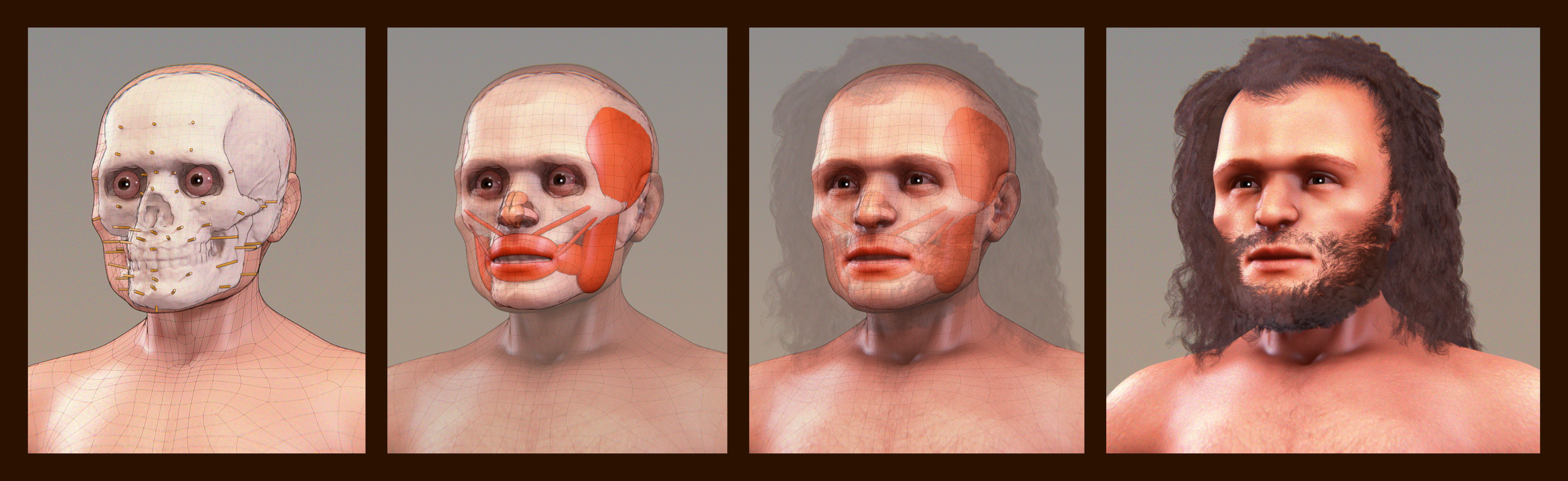
In other words, it's like a facial reconstruction.   When you start out with a skull and you end up with a sculpture, you are not creating a new person; you are revealing the person that was there all along.


At first, I thought this was the new answer to the question, but it didn't seem complete.  As I thought about it, I realized that when I write, what's happening is something the action of Hegelian Spirit. It's self-discovery by  discovering the other and realizing that I am not that.

In other words...

Why do you write what you do?

In large part, I write what I write so that I can reveal a character and know, when it is done, that I am not that character.

I'll leave the further psychological analysis of that to others.

.Nevets.

Monday, July 9, 2012

Be Brave Enough to be Boring

All---

There are worse things than being bored.  You could be trapped in a cavern of horrors behind a green door. You could lose a year of your life in which you might have committed murder.  You could be stuck in a heat wave, staring at a swimming pool that isn't clean enough to swim in.

I want my writing to be interesting, clearly, and as a writer of thrillers, a certain amount of excitement is rightly to be expected.  But if being bored isn't the worst thing in the world, why should I be terrified of it in my writing?  Do I want to write a boring story?  Um, no.  But do I need to fret over every little passage, afraid it might bore some readers?

No.

There aren't many books that I don't skip passages in.  I'm a terrible reader in some ways.  I have such a poor visual imagination that I skim through or skip over most lengthy descriptive passages.  I can't conjure the image in my mind, so I bore easily.

And what do I do when I'm bored?

I don't put the book away.  I don't stop reading the story.  I skim or skip.   I only give up reading if there seems to be no hope for a pay off.  If I don't have an investment in the story -- if I don't see an end to the boredom -- if I feel trapped by tedium -- then I might stop reading.

So, if being bored isn't the worst thing in the world and I know that my own boredom of the moment doesn't kill an entire work for me as a reader, why should I be afraid of it as a writer?

A couple of years ago, I entered a content that encouraged courageous writing.  My piece, "I Need This," was honored and I was able to publish, "Terminal Instar," in the Notes from Underground anthology.  It took some guts.  Some of it was what Rachel Thompson and Lorrie Moore would call, "writing something I would never show my mother or my father."  Some of it, though, was writing minor little digressions that might risk boring some readers.

In the end, it's often times the digressions that get me my most positive feedback.  It's taking a moment, amidst the adrenaline and emotional trauma, to philosophize a bit that I think gives my writing its special character.  I don't just write thrillers.  I write thrillers that linger and contemplate.  No, I don't linger in the moment like RJ Ellory does.  Instead, I linger in the ideas behind the scenes like Chuck Palahniuk might.  It's a recipe that I think serves me well, but it's a recipe that risks boring people.

And that's really the point.  It doesn't even matter if you're a writer.  For that matter, it doesn't matter if you're a creative person at all.    If you're an athlete you can't always go for the home run or the knock-out punch.  If you're a salesman, you can't always play for the big deal.  If you're an archaeologist you can't wait until you get a Phase III excavation.  If you're a forensic anthropologist, you've gotta do your metrics.

Whatever you do, if you put your all into it, if you try to own that thing you do, you need to show courage.  That doesn't just mean the adrenaline junkie kind of daring.  That means being brave enough to risk boring people.

You will probably manage to do just that.

But you will also reap great rewards.  And the truth is, most of the time, if you're good at what you do, you bore yourself more than you bore other people.

So.  As readers -- what do you do when something gets boring?  And, as followers of whatever path life has taken you down -- do you shy away from doing those things which might bore your clients?

.Nevets.

Friday, April 20, 2012

The One Point: Aikido and the Point of a Story


All---

Shihonage, Aikido throw
(photographed by Magyar Balazs)
A great many of the things I write begin in my mind with a philosophical question or idea.  A story forms when I envision a character and then throw them cruelly against that question or idea and see what happens.  This is the essence of my particular slant on psychological suspense: a dark story that begins with the tension between individual psychological and transcendent human philosophical questions.

Just the same, I don't make care of the idea of boiling any story down to a theme, a topic, a moral, or (perhaps worst of all), a "point."

Instead, I think it's like something we talk about in Aikido as, "the one point." In Aikido that "one point" is both the source of energy and center of action.  You might link it to the center of gravity.  You might relate it to the focus of psychological centeredness.  At the core, the one point is both the drive and the pivot point for everything we do in Aikido.

The one point isn't static.  It's dynamic.  It moves and shifts with the person.  It changes with the context.  The one point also isn't a physical X, Y, Z coordinate.  It's not something that everyone can look at, touch, and feel.

That's more like the role of the philosophical quesiton or idea that starts my story. It's the driver and the pivot point.  It's always there, and it's source of energy and the center of action -- but it may not be apparent.  You may not be about to see it, touch, or feel it.  You, as a reader, may sometimes see it as clear as it.  You, as a reader, may never know it's the there.  But that's okay, because it may be the one point, but it's not the point of the story.

.Nevets.


Monday, April 2, 2012

All---

"It can be difficult to aspire towards someone's quality without thinking you need to mimic their qualities."

I said that on twitter today. It might be something someone else has said. I'm not sure. I just know it reflects an occasional struggle of mine as a writer. There are many writers whom I admire for one reason or another. In a very general sense, I hope to be writers like them. Because I am a top-down thinker, this often means that I start with that vague sense of how good they are and deduce from it all the particulars that must somehow go into that quality. That's a perilous path, for it leads to comparisons that ultimately have less to do with the big-picture quality of the writing and more to do with specifics of style.

Within my own genre, over the past year, I have been particularly struck by the work of four different authors: award-winning standouts RJ Ellory and Ryan David Jahn, and newcomers Michelle Davidson Argyle and Jennifer Hillier. Each one exemplifies something that I would to achieve, but each one is very different from one another, and very different from my own work. Ellory's writing broods and relishes in the moment. Jahn takes brooding and turns it into physical and emotional violence that pushes each moment into the next. Argyle writes with the soft touch of a poet. Hillier's novel Creep moves like a thriller that lives messy, streaky fingerprints in its wake.

As much as I admire these writers' craftsmanship, and even those specific attributes, my own writing is very different. Ellory's writings feels, for all its exploration of American culture and history, like it has deep European roots. Jahn has a neo-noir flair. Argyle comes to genre writing from the literary world. Hillier's work reflects contemporary American thriller-writing with all its cross-media influences. My own writing is grounded in the shades-of-grey action thrillers of Jack Higgins (The Savage Day) and the fast-clip conspiracy novels of Robert Ludlum (Chancellor Manuscript) and plays in the surrealistic, philosophical world of Chuck Palahniuk (Fight Club, Choke). 

As a result, my fiction runs at a face pace, and gets bogged down if I try to force too many lingering moments. Violence is part of the context and setting, rather than a propulsive force. My descriptions are clean-cut and matter-of-fact, and my arch language owes more to philosophy than to poetry. If the end result is like non-written media, it's far more like Japanese suspense drama than it is like CSI or Law and Order: SVU.

What I often need to remind myself is that it's not those specifics that I need to strive towards. What I want to be is fearless. I want to write evocatively and effectively. I hope that my readers feel a rush of adrenaline, and then stop to think. I hope that my readers feel the darkness, and grasp for the little fragments of light shining through. In their own way, these broad characteristics are part of what mark Ellory, Jahn, Argyle, and Hillier as quality. These are things toward which I can strive without sacrificing my own unique style and voice. These are measuring sticks that are independent of context and individual technique.

This isn't a writing thing. This is a living thing. Whatever your goals are. Whoever you want to be. Whatever you want to achieve. Aim for quality. Work with your own qualities.

.Nevets.

Friday, March 30, 2012

Life, Nevetsized


All---

So usually when I talk about things being Nevetsized, I'm talking about putting a dark, morbid, cynical, vaguely existential, dryly satirical spin on ordinary things.  (Like, incidentally, all the cool swag at the Cafe Press shop.)  I might describe a comment such as, "All those job applications you never heard back on are being used to create the perfect profile for psychological torturing you on your 30th birthday," and tag it as, #HiringNevetsized.  As a for instance.

But today, I want to just let everyone know a little bit about what's been keeping me busy.

First and foremost, I have been able to hit some good milestones on my writing.  As I'm mentioned in other places, Sublimation is in final edits.  I have those back and am working on finishing them.  Then it's just a matter of tweaking format, and the novel will be out for query.  I have also completed the first story featuring Solomon Matthews, aka "The Death Reader," a circuit-riding defense attorney and forensic anthropologist in the American old west.  A couple other shorts are nearly finished and ready for submission, as well.


Second and also foremost, my wife and I have bought our first home.  It was a whirlwind process that began a couple days  after Christmas with us saying, "Hmm, well, let's start looking around to see if maybe we want to think about buying a home in this area," and ended with us closing in the beginning of February on a 1966 ranch home situation on about three and a half rolling country acres.  It's a beautiful house on a beautiful piece of property that has some well-established landscaping near the house and then a lot of room to work with as we develop our little hobby farm for ourselves.  It's truly a wonderful place, and home-ownership has been treating us well, but I can't say that I realized just how time-consuming the whole process was going to be.  We're still moving in in a lot of ways, but overall it's more like we're settling in now and getting the feel for country life and taking care of a house and a property that is entirely our responsibility.

Writing and home-ownership are only a part of Life, Nevetsized.  In case you're unaware, I also work a full-time job in IT management.  From about last August until about the first week of February, I was working 70-hour work weeks and we were still falling behind.  We are now starting to get caught up, and work weeks are back down to 40 to 50 hours, but the nature of my position is such that the buck stops here, and sometime there are a million bucks at once and there's no predicting when or where those bucks will arise.  To stretch a metaphor well beyond acceptable limits.

I also serve as a certified EMT on volunteer ambulance that serves the town I work in.  It's also the town we used to live in.  Now that we're out in the country, we're well outside the limits of acceptable response time so I've gone down to serving only a couple nights a month, on which occasion I stay with friends in town.

Since last fall, I've also been teaching English as part of a major program that reaches out to international adults.  The program has about 230 students overall.  The class I help teach has about 16 students, mostly refugees.  This is one night a week, about an hour a way.

Additionally, in December I took on constructing the on-line cultural anthropology class for my university, and this spring I've also been teaching the in-class cultural anthro course, which I do about every other year or so.

That's pretty much what life is, Nevetsized.

Oh, and, living in the country, there's not really internet at our house beyond tethering through my Droid.

.Nevets.


Thursday, March 29, 2012

Writing Fiction as an Anthropologist

All---

When people find out that my educational background and most of my research interests are in anthropology, I often get looks of confusion.  "Then why are you... ?" questions hang in the air.  The answer, "Because you're clueless," seems so obvious to the other person that they rarely formulate the question out loud.

That's probably a good thing most of the time, because I'm not sure I have a good answer most of the time.  When it comes to, "Then why are you writing?" I actually do have a good answer.  In fact, I have a lot of good answers.  Some of them are the obvious sort of appeal to an interest in the human experience.  Some of them are a little more precise.

One of the most important things to me about anthropology is the anthropological method, which has researchers moving from an outside observer's descriptive stand-point toward an insider's experiential perspective.  Both are important, and both most be included.

Another tenet of American anthropology, ever since the days of Franz Boas, has been relativism.  What that means for anthropology, especially in the theoretical vein known as historical particularism, is that every culture should be measured against its own ruler and understood on its own terms.  This does not preclude the researcher from holding personal value judgments at odds with that culture's ruler.  It simply means that, in a very real way, you put yourselves in the mental and cultural shoes of the folks you're trying to understand.

This anthropological approach has really come to define how I engage with people.  I try to move from the description and analysis that I can do on the outside to come closer to an understanding of their real experience.  That's nearly impossible to do with real people, one-on-one in the context of daily interaction.  One of the things that I get personally out of writing is a chance to do just this thing.  Developing characters in writing is my chance to take those external descriptives to create a model of a person and then I toss a narrative at them to get an idea of how they actually experience things.  It's one of the reasons why I've come to enjoy writing in the first person so much, and why I place such value on voice.

It's not really the same thing as doing anthropology, but it's close enough to get me by.

.Nevets.


Wednesday, March 28, 2012

Crank Up the Jurisprudence

All---

By now, I hope that you'd read my last post, the short story, "Cops and Robbers,"  It is perhaps a little long for a blog-posted piece of flash writing, but I hope you can find some time to check it out.  As is often the case with literature, it's an expression of thoughts that hopes to evoke an understanding -- in this case, an understanding of how complicated the legal world can be, and how brutalizing that complexity can be to the soul of those who spend their lives dedicated to and immersed within that world.

The story, "Cops and Robbers," was in  part inspired by a number of folks I met during my time doing forensics, but especially by a couple of cops I met and talked with for hours around a bonfire one night during forensic entomology training camp (maggot school).  In part, though, the story was also inspired by the terrible story of Trayvon Martin and George Zimmerman and all the families, friends, and loved ones that are "collateral damage" any time there is crime, hatred, and injustice of any sort.  In retrospect, I wish the references to the Trayvon Martin case were a little more oblique than they are, but I make it a principle to not revise flash fiction, so I've left it be.  I didn't set out to write about the actual case, for I honestly don't have the evidence in front of me to make any commentary on the specific case.  Instead, I wanted to tell a story about jurisprudence -- about laws work (or don't) and how that impacts both the lofty ideal of justice and the feet-on-the-ground reality of people.

My own interest in jurisprudence came pretty naturally.  I love order.  I love rules and forms and structures.  Even more, I love finding ways to effectively navigate or manipulate rules and forms and structures.  It's much more fun for me to create my own play space in a world of obstacles, than to be set out in an open field with an open-ending allowance to just go nuts.  On top of that, I love words, and I believe nuance, implication, context, and precision are not semantic trivialities but at the very core of verbal meaning.  All of this made it easy for me to fall in love with laws and learning how they operate.

I'm the guy who, when it's time for a supreme court report (on any case!), turns up the radio and hopes every one stays quiet so he can listen.

I realize that not everyone has this sort of natural appreciation for or love of or even tolerance for the verbal, logical, and ethical gymnastics that go into the law. It's something that I work into my writing from time to time, usually in terms of (as Jeeves would say) the psychology of the individual.  Anyone who is caught up in the law must grapple with a lot of mental and moral challenges, and those do have an impact on them personally.  If a story I write occasionally gets a reader thinking about, asking questions about, or just curious about jurisprudence and the ways laws work, I'm a happy writer.

.Nevets.

Sunday, October 30, 2011

Self Your Esteem

All---

It was a simple  exercise.  Teacher Mark called Teacher Joann and myself to the front of the room so that our literacy-level ESL students could practice describing us.

"Teacher Mark is a man.  Teacher Nevets is a man.  Teacher Joann is a woman."


"Teacher Mark is tall.  Teacher Joann is short.  Teacher Nevets is average."


"Teacher Mark has short hair.  Teacher Joann has long hair.  Teacher Nevets has average hair."

Teacher Mark didn't realize that he was about to shock and confuse me.

***

As a young teen I was overcome with allergies and asthma that severely impacted my ability to exercise during parts of the year.  At the same time I was also given a lengthy regimen of steroid medication that through off my body's ability to get any weight-related benefit from the exercise I was able to do.  I spent over twenty years being heavy, after being a scrawny, monkey of a kid.

I never quite shifted my mental image of myself.  At my heaviest, I was 240 lbs at about 5'9", but I never quite felt like I was as overweight as I was.  Some folks have remarked since losing weight that they hadn't realized I'd been 240.  Even when I was that heavy people would sometimes remark, "You're hard to figure, because you're overweight, but you just keep going."  My weight didn't stop me from doing forensics in tight spaces, from doing archaeology, or from throwing my all into whatever sporting activity I was trying my hand at.

While my mental image of myself probably underestimated my weight, I wasn't blind of stupid and I knew I was overweight and that I had a lot to lose.

Over the past 18 months or so, I've managed to lose quite a bit of weight.  At the beginning of October, I was down to 164 lbs.

***

"Who's fat?" asked Teacher Mark.


"Teacher Mark is fat," the class answered with no prompting.


"That's right.  Who's average?" asked Teacher Mark.


"Teacher Joann is average," the class answered with no prompting.


"That's right.  Who's skinny or thin?" asked Teacher Mark.


"Teacher Nevets is skinny," the class answered with no prompting.


"That's right."


***

I was completely thrown-off.  As soon as Teacher Mark has started that exercise, I had already cast myself as the model for the average descriptor.  I think I actually made a googly-eyed expression of surprise.

***

I'm not going to say that the words of others are unimportant.   There are few words for how angry I get when I see others actively undermining the self esteem of others and destroying their belief in their dreams and aspirations.  It's also true that we all sometimes need a little validation, an outside check to assure us that our estimation of ourselves and our work is accurate.  And, yes, the encouraging words of others can be a valuable and powerful buoy to a flagging spirit.

But, to me, the lesson I learned the other night in class was this:

It's all too easy to undermine your own own self-esteem.


People who've known me compliment me for my weight loss.  Teacher Mark and the class were all in agreement that I'm thin, even though they never knew me at near my heaviest.  If anyone isn't sure that I'm thin, if anyone is uncomfortable describing me as thin -- it's me.

Just me.

It's my own body image.

It's my own willingness to compliment myself and accept my own success.

***

Eminem, photo by www.glenjamn.com

Look, if you had one shot, or one opportunity
To seize everything you ever wanted in one moment
Would you capture it or just let it slip?
-- Eminem, "Lose Yourself"


So here's the point of all this.  This isn't about weight loss.  This isn't even really about me.  This is me saying to all of you, to any of you who happen to be reading this, Own your self esteem.  Yes, others will have an impact on how you see yourself and how you feel about yourself, but your self esteem is, by definition your own.  Step up to the plate and claim it.

I'm not selling the power of positive thinking or self-actualization.  What I'm doing is asking you to consider these questions --

Are you an author, trapped in a self-image of "trying to be a writer"?

Are you an artist, keeping your paintings to yourself until they're "good enough"?

Are you a guy, not asking out out that girl who you think might like you, because you can't imagine why she would?

Are you a woman, afraid to step out after your dream because of a parent who told you that you wouldn't be able to cut it?

You may have been wounded by others, but maybe it's time you re-cast how you think of yourself, because maybe your self-image is lagging behind reality.  Even if others are getting you down, there's no reason for you to pile on to yourself.

.Nevets.

Saturday, October 22, 2011

Sublimation - The Scoop

All---

So, what's the latest on Sublimation?


The latest is that I'm doing one more round of revisions prior to proofing for queries.  The overall feedback I've gotten from my readers has been very positive, and I'm very encouraged about the book.  That said, there were a few minor tweaks suggested that I think will improve the quality of the book, and so I want to take care of those.

There were also two slightly more fundamental points that one reader struck on that resonated with two of my own concerns, and I'm addressing them, as well.  I think the book will be a little more sound for one, and the characters a lot richer for the other.  Neither fix should take a tremendous amount of time, but do require some careful consideration.

Here's hoping for quick, but quality fixing!

.Nevets.

Friday, October 21, 2011

When The Going Gets Tough...

All---

As so often happens in life, I must admit I cannot live up to the standards set forth by Billy Ocean.


'Cos when the going gets tough
The tough get going
When the going gets rough
The tough get rough


(Billy Ocean, "When the Going Gets Tough")

I have been, as you all know, crushed of late by the volume of work and what having that volume of work means for the other things that are part of life.

The good news is, as of today, there is a very visible break in the storm in clouds, and I almost feel human again today for the first time in a long while.  A backlog that has been over our heads for an incredibly long time has finally been reduced.  Not only does that mean the volume of work should be normalizing, but the stress of work should also be normalizing.

Even so, I'm having to face up to reality.  I am, by nature, an all-in kind of guy.  Whatever I'm doing, I want to  be as absolutely close to 100%  effort as I can be.  That sounds admirable, but only when tempered by rational thought and an honest evaluation of time, health, and energy.  I lack that tempering.

And so, even in the best of times, it is in my nature to try and give 100% of myself to my job, to my writing, to my volunteer work, and so forth.  Of course, this is mathematically impossible.  It is also physically, mentally, emotionally, and spiritually impossible.

I'm looking forward to being able to get back to writing, but also realizing with some sadness that I do not relate to people can hold down jobs and pursue their writing diligently.  That's too bad, because I'm someone who does have to hold down a job, and this means that my writing will always suffer some because of it.

On the other hand, being honest about this also has something of a relieving quality, as it means I probably don't need to beat myself up over it quite as much as I tend to.

I'm hoping that for the moment the easing of craziness at work will allow me to finally write and be human again.  Please look up my page on Facebook, if haven't (https://www.facebook.com/c.n.nevets).  I'll be probably be micro-blogging there a bit more, as that can be done in easy snippets.

.Nevets.

Thursday, August 11, 2011

Group Projects: The Bane of My Existence / The Future of My Career

All---

My hatred of group projects began in the third grade. I can be very precise about this because it was one of the most traumatic developmental moments of my life.  Like my traumatic moments, stripped to its bare bones, it was pretty silly.  But to third-grade-me it world-shattering.  It shaped how I felt about projects, but more than that it shaped I perceived other people and developed my sense of ownership over that in which I have invested.

Here's the scheme.

It's third grade.  Social studies project.  I love history, far more than any other kid in the class.  We're supposed to build some sort of diorama or model.  Another kid and I hit on the idea of making a model of an aztec city.  We divide up the labor based on parts.  Per usual, I did most of the work, all of the research, and my parents purchased most of the supplies.  The other kid who'd helped develop the idea helped a little.  Another contributed a plastic motorcycle.  Yes, a plastic motorcycle for a model Aztec city.  I worked hard to turn it into a bicycle which, I reasoned, was at least a little more plausible. The others did nothing.

At the end of project day, we got to take our projects home, and I was deliberately squeezed out by the other kids who developed a plan for taking a few pieces separate and having a rotation of having the model at home.  I got no turn in the rotation.  They got the teacher's blessing by taking all the credit for the work, while I stood to the side.  Stunned.  Crying.

From then on, group projects were to be avoided at all costs.

Over time, the sting of that experience softened, and by the time I was in college I didn't hate them with quite the same passion, but I still dreaded them.  Rather than credit or ownership, it was carrying the load that wore me down.  I remember a series of group geography projects in which I was the only one in my group who knew roughly where London and Paris were and knew that Egypt was still a country, not just something "from Bible times."  I wasn't just producing the work, I was having to remediate their education.

Group projects, it seems, are either hateful or wearying.

Grad school forced me to change that, though.  A research project cannot be a one-person job.  A thesis is the work of the entire committee.  Solitary work was a non-starter.  Avoiding group edits or contributions to to my thesis was a non-option.  In the end, my thesis had my name on it.  In the end, it defined my academic career.  In the end, it established my foothold in the world of scholarship.

And yet, in the end, it was no longer the research I had done or the thesis I had written.

It was the research we had done, and the thesis we had produced.

Sometimes the contributions were valuable.  Sometimes the edits, corrections, and suggestions made sense.  Sometimes the shifting of my theoretical framework were welcome.  Being forced to soften my conclusion?  Not welcome.  Neither was getting back an entire chapter back with one comment: "This is too poorly written for me to even read and comment on."  Neither was being forced to include data from researchers I didn't know or didn't trust.

I had to learn to separate my work from our work.  I had control over my research, and I had to learn to be satisfied in that.  I could write the thesis the way I wanted to before giving it to my committee, and I could be proud of that.  Once I had done my part, and it was in the group's hands, I had to to realize that it was no longer mine.  It was ours.

And, in the end, I'm proud of the thesis we produced, too.  Is it the thesis I would have written on my own?  No, not entirely.  Is it true to my essential vision for the project, though? Yes.  Is it better?  Maybe; they think so.  And the truth is, it doesn't matter if it's better or if it's worse.  Because, even though it's my name on it, it's the product of all our combined efforts.

Now, as I prepare to query Sublimation to agents, I'm glad that I've had that experience.  A novel that is published out of a publishing house is a group project, too.  I can write the novel I want and be proud of it.  But, in the end, the novel that hits the shelves will be the product of our combined efforts, even though it's my name on it.

.Nevets.


Tuesday, August 9, 2011

Swimming in the Syrup, Grabbing for Minnows

All---

School of minnows, image from NOAA
This is not whining.  This is not complaining.  This is  just me, describing what I see, as I sit here at the bottom of this goldfish bowl full of syrup, staring at a phantom of the room light, my arms flailing around trying to grasp  at the tails of all the dozens of minnows that are swimming by.  I'm not sure what I want to do with them if I catch them.  Eat them?  Examine them?  Ride them up to the surface?  All I know is that I do want to catch them.  If only I could see them more clearly.  Move my arms more swiftly.  Anticipate their movements as well as I can see the tracks left in the syrup.

But I can't.

And that's what it feels like these days.

If you were to stereotype me as a character, I think one of the main traits you would jot down would be, "curious."  I won't belabor the list of things I've studied, done, or experienced.  There are few things that don't grab my interest in some way, shape or form.  There are few things in the world which don't spark some little bit of curiosity in me.

I don't have a passive curiosity, however.  If you were to jot down a second trait in that notebook, it might be, "driven."  I don't mean that in an Alex P. Keaton sort of way.  Some time ago, a three-trait personality test classified me as a Visionary-Visionary-Visionary.  What all that means is that when I have an interest that captures me, I feel compelled to realize that interest.  I have no static ideas.  Every notion is propulsion.

That can be an amazing thing when you have focus.

Combine that with curiosity, and you're being propelled in a million directions.  Every direction feels mandatory.  Every direction feels important.  Every direction makes sense.

Family.  Work.  EMS.  Teaching.  Anthropology.  Studying Mandarin.  Studying Thai.  Studying Japanese.  Gardening.  Photography.

Oh, yeah.  Writing.

It's a tricky balancing act in the best of times.  When I'm exhausted by work, allergies, or anything else, that's when I end up at the bottom of the goldfish bowl, grasping at minnow tails.

I used to stress about it.  I don't stress about it as much.  I know it's how I am, and beating myself up over it isn't going to help. Instead, I get this restless feeling as my mind races in too many directions, desperately begging me to keep up.  Feeling restless doesn't help combat exhaustion.

The downside?

When work is going crazy or my allergies are kicking my butt -- or both -- the writing  slows down too much for my own taste.  My brain just can't stay in multi-direction over-drive.  And, please understand, it's not about task discipline; it's about what all the corners of my brain are doing.  Five or six streams of thought are okay.  Full steam ahead?  Harder, but maybe okay.  Unfiltered and overlapping?  Unmanageable.

The upside?

My writing and my authorial voice directly reflect this personality.  My writing is voice-heavy and driven.  My narrative is multi-stream.  My stories often reflect the reification of some philosophical idea.  Everything that distinguishes my writing (whether you like it or you hate it) can be credited to (or blamed on) my curious, driven brain.

Happens a lot doesn't it?

The things which make the going tough also give our particular way of going its unique charm.

If only I could see those minnows a little more clearly, move my arms a little more swiftly...

.Nevets.

Monday, August 1, 2011

Making Evil Too Exciting

All---

Photo by Harlequeen
If you've been familiar with my blog for any length of time, you'll know I talk about evil a lot, mostly about the writer's relationship to the portrayal of evil.  If you're familiar with my stories, you'll know that my interest in exploring the nature of evil is core to what I do.  The past few days what's been niggling at me is the notion that we (writers, TV producers, movie directors, playwrights) make evil pretty exciting.  In truth, most of the time, evil is an uncomfortable sort of boring.

When I think back to my time doing forensics, it's pretty apparent that facing evil is not a hot rush of adrenaline.  It is a cold, empty ache in the belly.  It's not a thrill ride, heart pounding as you wonder what's around the next corner.  It's a dull, weepy mood as you realize that you know what's around the next corner for someone.  Maybe you.  Maybe a loved one.  Maybe a stranger.

Despite all the wild, intriguing motivations we right about -- and which occasionally do exist in reality -- most murderers are a lot more boring.  On one case we were involved with the murderer explained his motivation as, "They made me mad.  When I get mad, I shoot people."    On another case, the killer was too drunk to remember why he kicked a man's head in.  On a cold case I was part of, we identified a woman as the victim of a serial killer who himself was long dead, and it all happened as if we were sorting mail.

Is there interesting psychology and human drama in these stories?  Yes, to be sure.   Is there adrenaline?   Excitement?  Not much, at least not the kind we usually write about or portray.

I suppose this isn't news, but it's something that weighs on me sometimes as I write.  My stories are surreal and larger than life.  I want them to be exciting.  I want them to be compelling and memorable.  I think, in some ways, they are effective because of that.

Sometimes, though, I wonder if I'm doing a disservice to real evil, or injustice to the people who confront or fall victim to real evil in the world.  Their experiences aren't exciting.  They're devastating.  They're destructive.    They're dramatic.  But their lives aren't thrillers; they're just miserable.

.Nevets.

Thursday, July 21, 2011

Those Who Come Later

All---

Author of psychological suspense, Jennifer Hillier blogged recently about the mixed emotions, the highs and lows, the ecstasy and the fear of having her book finally out there.  Her hardcover debut novel, Creep, is now on the shelves of stores and in the hands of readers.

As I thought about this, and imagined how it might feel someday to have my own novel out there, it put to mind a day when I was doing CRM archaeology in Alaska.

We were doing a fairly routine survey in advance of some railroad work.  We were definitely out in the back country.  Every day we'd drive out to the middle of nowhere, hop on a helicopter, and get dropped off even further out in the middle of nowhere. Then, we would hike in, even yet further from anywhere to the official project corridor.

Each day would cover somewhere between 3km and 6km of official project territory, with quite a bit more hiking to get from one part of the project to another.  We saw a lot of country.  We were walking in places that hadn't been walked in a very long time, sometimes perhaps even generations.

One day, in one of the deepest spots, just off the project corridor, we came upon an old, abandoned cabin.  It was a simple log cabin, the material brown and weathered.  The tiny windows had thin, plate glass, mostly broken, and permanently marked with dust.

We were curious, and we tried to open the door.  It barely swung open wide enough for a person to slide through sideways.  A beam of wood on the floor deliberately blocked the door from widening any further.  Bear-proofing.

Entry wasn't as simple as  sliding sideways, though.  On the floor was a board with up-turned six-inch nails, rusty from years of exposure.  More bear-proofing.

After a sideways hop, we were in a world that hadn't been seen for years.  There were newspapers from the early 20th century.  Boxes and cans of food from around the same time.  The bed wasn't made, but there old, rough cottons on it.

The door might have stayed firm, but winter had broken through the windows long ago, and blasted between logs years before.  There were more nails inside the windows to prevent bears from entering, but that hadn't stopped cold and snow.  Most perishable material was ruined, and barely recognizable.

We had enough of an impression to understand that this had been a cabin that had seen a lot of use.  It had been made and refined over the years, and with great care.  It had been abandoned with hope of return.

But had the owner of the cabin simply left on a hunting trip one day and died in the wilderness?  Or had the owner gone home after a season and never made a return trip?  Or had the owner taken ill, been transported into town, and never returned?  It was up to us to fill in the gaps.

That cabin haunts me a little, and there's a lot more to be said about it, but today it struck me that anything we produce is like that.  Whether it's a book, a work of art, or a cabin in the woods, we pour our thoughts, feelings, and energy into it.  We turn stuff into part of our story.  And then, at some point, it's our of our hands.

The owner of that cabin never will never know that we were there that day.  He'll never know what we talked about, what we thought about.  He'll never be able to tell us how right or how wrong we were.  He'll never know that our thoughts and interpretations were influenced by.  He'll never even know what I've chosen to tell you about it today.  And, yet, that cabin was his story.  It was his investment.  It was a big piece of him, just sitting out there in the back country of Alaska, ready for us to happen upon and encounter.

The difference is that Jennifer may not know what readers are doing with her book, but she's well aware that her book is out there in the wilderness and that readers are encountering it.  But that's about all she knows.

Whether you're a writer, an artist, a homeowner, or just a person that does anything at all, it seems like a lot to think about.

.Nevets.

Monday, July 18, 2011

Writing from a One Point: The Thing Steven Seagal Taught Bill Shakespeare

All---

photo by Tharso
This afternoon, I was smarting off to author Roni Loren on Twitter.  She had expressed a very real authorial frustration with not knowing where to start her current novella project.  I offered her some #CannedWritingAdvice.  When she asked for a a can opener, I spouted off deep-sounding drivel, drawing on my old radio improv skills:


Start with the voice and let the narrative flow in all directions from that one point.

While a fair summation of how I right, and how I structure stories, and reflecting some of the resonance of Scott GF Bailey's unified theory of writing, I meant this to be flip.

Only.

My word choice tripped me up, and I haven't stopped thinking about it ever since.

You see, in aikido, we talk about a one point.  Your one point, thought of as the center of the energy which the martial art draws on, is somewhere between two and four inches below your navel, depending on your physique, health, mindset, etc...  Sometimes, you also work around an extension of the one point, a point in space measured out from the point in your physical body. 

The idea of the one point is complex.  Here are a couple of examples.  

To the left, you can see  me, in a rusty aikido ready stance.  Most of it's not terrible, given my dress, circumstances, and rustiness.  If I were doing this properly, my arms would be drawing from my one point and extending the energy out through my fingertips, directly at my target. 


Below, you can see an aikido master, using the one point to lever his 
opponent down.  He first drew his attacker in, and then controlled him, essentially like bending a flexible rod over his knee -- except bending his opponent over the one point, in stead.

Sometimes you redirect energy from the one point.  Sometimes you redirect your subject around the one point.  The one point is the center of a dynamic sphere of activity at the heart of everything in aikido.

Now, back to what I said to Roni when I was smarting off: Start with the voice and let the narrative flow in all directions from that one point.

I'll be darned if that's not true to how I write.  The voice really is my one point.  It is the center of energy withint he body of what I'm writing.  Everything else I do is to redirect that energy or to redirect my readers around it.  The voice is the one point at the center of the dynamic sphere of my writing.  It is the thing which I extend out into the universe, and the thing which provides the lever point for whatever impact I hope to have on the reader.  The rest of the narrative really does flow from there.

Perhaps it's a little thing this analogy, but it helps me embrace the idea even further.  Because I love working with analogy, it also helps me understand other things.  Aikido disciplines suddenly seem directly applicable.  Focus and directionality in my ready stance tells me about preparing for writing.  It's about deliberate extension of voice, not about character and plot notes.  Aikido exercises suddenly seem instructive.  Routines in which we practice complex circular motions while pinned to one point give me insights in how to perceive my story as revolving around the voice.

Love those epiphanies...

.Nevets.


Sunday, July 17, 2011

Sublimation - It's Nearly a Book!

All---

Just quick post to let everyone know that Sublimation, the psychological suspense novel I've been working on for far too long, has reached the next milestone.  I've completed my writing and main revising, and have sent the 99K manuscript to a couple of key readers and my personal editor.  When I get all that feedback in, it's one last round of revisions, and then (assuming the revisions aren't too major), it will finally be time to begin querying.

In brief, Sublimation is a psychological thriller about good and evil, order and chaos, a woman who loves the rules and man who loves finding ways around them.  There's plenty of action and suspense as the surreal narrative winds through the personal history of two people: a business man who bluffs his way through every situation and an agent who who clings to the order provided by the law.  Beginning with a high stakes poker game that turns into a bombing, Alec Smith quickly finds out that he can't bluff his way through the blood on his hands.  Grey Kinjou stakes her reputation, her job, and her family on stopping Smith.  And in the corner, in the darkness, one man cackles and fiddles with the pearl choker around his neck, hoping for their mutual destruction.

You can read more about Sublimation, including an excerpt on my new Books tab.

In the mean time, I'm shelving the MS until I start getting back solid feedback, even though there are still formatting issues to take care of and other little details I want to wrap up.  I'll be using this time to tidy up and submit some of the huge stack of short stories that are sitting here, just about complete.

Maybe soon you'll hear news about a new Nevets story of psychological self-destruction -- of twisted action on an inherited houseboat -- or about a forensic anthropologist in the old west.

Stay tuned!

.Nevets.

Friday, July 15, 2011

The Life of Brian Paradox

All---


True individuals,
photo by Eden Keller of Mechanicsburg

Brian:You've got to think for your selves! You're ALL individuals! 
The Crowd: Yes! We're all individuals! 
Brian: You're all different! 
The Crowd: Yes, we ARE all different! 
Man in crowd: I'm not... 
The Crowd: Shhhhhh!

While I am hardly what one would call an extreme individualist, there are some ways in which I struggle with a rebellion against conformity.

Top Gun?  I've never seen it, and I can't bring myself to, simply because of its popularity and buzz among my generation.

The Atlanta Braves?  I loved rooting for them when nobody cared about them, but once they become a national craze, it was harder to stomach calling myself a fan.  (Not such a problem anymore, but I also don't really follow MLB anymore.)

Harry Potter?  The Hunger Games?  Part of the reason I've never read either series is simply -- and childishly! -- because I can't bear the thought of following in the crowd's wake.

I recognize the pettiness of all this, and I recognize that sometimes I am probably robbing myself of some things I would actually enjoy.  Pop culture, though, is only the gentlest way in which this impacts my life.  It impacts me in other ways, too.

For instance, my writing.

I like the fact that my genre, psychological suspense, is a bit of a borderland, and while I hope for success for myself and my fellow writers, another part of me dreads a day when perhaps the market will be saturated with psychological suspense authors.  I have entire TV shows scripts I've abandoned once I ran across a project someone else was working on that was remotely similar.  There was some talk about True Grit's success opening up doors for western fiction.  Good for me, since I want to write some western fiction, but I'll confess to a dark sort of relief that such did not happen because I want my western fiction (when and if I write it) to be accepted on its own, not because it's part of a trend.

Most pernicious, though, are the little things.  Little, tiny voices that creep in while I'm actually engaged in writing.  And they sound so noble.  So very noble.  It's hard to put up a proper defense against them.

I've learned how to be brave in my writing in many ways, but the one thing I still shirk in fear from is conformity.

I have literally, no exaggeration done the following in recent writing projects:

  • Changed my entire plan for a character because I didn't want to be "another" writer who throws twist after twist into my books.
  • Taken out entire scenes because I didn't want to be "another" writer who packs violent action into his thrillers.
  • Fretted over the course of a plot simply because I was afraid it might be too predictable.
Those all sound like fine things in their own way.  Even as I write them here, I find myself thinking, "Good call, taking action on those, Nevets."

But none of those things are more important than the narrative.  If the narrative ends up violent, so be it.  If the narrative ends up twisty, so be it.  If the narrative ends up predictable, so be it.  Perhaps the damage of things things might be muted in other ways.  But the story is the story.

I can't be the guy who sits there saying, "Nope, I'm the one person who's not different," out of simple defiance.  I'm not a four year-old.  I need to not act like one.  No, it's not good to simply go with the crowd.  No, it's also not good to simply go against the crowd.  Sometimes, you're just being silly.

But I'm still not sure I can bring myself to watch Top Gun.

.Nevets.


Wednesday, July 13, 2011

What I Learned from Clive Cussler or His Clone

All---

A few years ago, I met Clive Cussler.

Actually, I'm not sure it was Clive Cussler.  I didn't even connect the dots until very recently.  In case you're not familiar, Clive Cussler is a huge, blockbuster best-selling author, best known for his series of thrillers about diver, treasure-hunter, and lady's man Dirk Pitt.  His books incorporate history and science with a James Bond sort of playfulness and a Robert Ludlum pace.  He has sold more millions of books than even seems like a real number.

None of that came up when I met him.  Or his clone.

I was on a domestic flight at the time, sitting next to an older gentleman, whose general fitness and charisma spoke of an active, rich life.  As we got talking, he told me stories about places he'd been and things he'd seen.  He had a great eye for detail in the stories, which were engagingly told.  He was less detailed and less engaging about what exactly had brought him to those places or exposed him to those things.  He'd been around the world.  He'd grown up in California, he lived in Arizona.  He loved classic cars.  He was pretty clear that what he did now was collect cars, but not about much else.

I'm not an expert on Cussler's biography, and I was just enjoying the conversation with the man on the plane, not probing him for information, but given his appearance, age, personality, and the few general facts I have, I like to think there's a good chance it was Cussler himself.

But this isn't a story about meeting a famous writer.  This is a story about how I met Clive Cussler and one of the few things we didn't talk about was books or writing.   Sometimes as writers, I think it's easy to focus so much on our writing, that it's all we talk about and all we think about, and the next thing you know Amazon.com has close to 12,000 eBooks self-pubbed in which writers are writing about writing.  If you're writing or have written a book about writing, I'm not criticizing that.  It's a a fine thing to do.  But I wonder if it's what you wanted to write when you started writing?

We blog about writing.  We tweet about writing.  We FB about writing.  We make friends with writers.  We go to writing conventions.  We join writers' social groups.

All fine things, all things I do or have done.

But it narrows the world frightfully.

Romance writer Roni Loren, writes terrific blog posts about writing, but she also talks about hot guys and family life and healthy eating.  Zimbabwean ex-pat Andrea Eames blogs about fashion and style as much as more than she blogs about writing.  Literary craftsman Scott G. F. Bailey blogs about writing, but he also blogs about whatever he's reading, as well as plays he's seen, and whatever else is on his mind.  Darkly comic literary writer Aliya Whitely blogs about her writing, but also about vegetables and video games and she tweets ridiculously sharp verbal humor.  Writer of published crime novels and women's short fiction, Frances Garrood blogs about horses, shopping dollies, houses, politics, the elderly, and the entire tapestry of life.

There are other writers who maintain a diverse activity set, but I run into more and more of us who get dragged into the LaBrea tar pits of writing.

Ben Sisko said it, and I've repeated it, and I'll repeat it again: "I'm no writer; but if I were, it seems to me I'd want to poke my head up every once in a while and take a look around; see what's going on. It's life, Jake! You can miss it if you don't open your eyes."


Assuming it was Clive Cussler I met, and not his clone, that's the kind of writer he is.  The kind who can tell stories about China and Mexico.  The kind who has stories about boats and bicycles, about hunting and kidnappings.  The kind who can fill a flight with entertaining stories, without ever once talking about books or writing.

That's the kind of writer I try to be.  I don't usually make it.

.Nevets.

Label Cloud

#DarkAndTwisted (5) a razor wrapped in silk (2) about me (5) absolute (1) acceptance (1) accountability (1) advice (54) aesop (2) agents (2) agony (1) aikido (6) alaska (2) alcohol (1) alex mackenzie (1) aliya whiteley (1) allegory (1) allergies (1) alone (1) amaretto (1) ambulance (17) anchors (1) andy dick (1) angel lost (1) anthology (4) anthony pacheco (1) anthropology (4) applesauce (1) approach (1) appropriateness (1) arashi (1) archaeology (1) archaeololgy (3) argyle (1) art (1) audio (3) author (11) award (1) background (1) bacon (2) bar (1) battlestar galactica (1) bbs (1) beauty (1) ben folds (1) bhangra (1) bioarchaeology (1) biography (2) birthday (1) blog tour (1) blogfest (9) blogging (5) blogosphere (2) blogsclusive (14) blurb (1) bones (2) book (4) boring (1) born to fly (1) boss (1) boundaries (1) braai (1) bravery (2) bridge flag (1) brutal (1) business (3) c + c music factory (1) c n nevets (108) c s lewis (1) cabin (1) cafepress (6) cantaloupe (1) career (2) cat (1) challenge (2) character (11) cheesy (1) cherry republic (1) christmas (4) chuck palahniuk (2) chumbawumba (1) cinderella (2) cinders (4) clarissa draper (2) classification (3) clive cussler (1) commentary (4) community (1) compelling (1) complete (1) confidence (4) conflict (1) conformity (1) confusion (1) congress (1) conspiracy (1) contest (31) conversation (1) cooking (1) cottage (1) courage (5) craft (4) creation (2) creep (2) crime (1) crime writing (36) criminal (2) criticism (2) critiques (2) crow (1) culture (2) cussler (1) cutting (1) dark (11) davin malasarn (3) death (1) deb markanton (4) deborah swift (1) deduction (1) definition (2) description (2) destruction (1) development (3) dialectic (1) dialogue (1) direction (1) discussion (2) dog of the north (2) domey malasarn (5) dr. who (1) drama (3) dramatic (1) dream (1) drugs (1) edit (2) editors (4) emotion (1) ems (8) emt (3) endings (1) ennui and malaise (4) entry (1) epiphany (1) escher (2) essay (2) ethics (3) everyday (1) evil (3) excerpt (3) exercise (1) existentialish (4) existianlism (2) experience (3) experimental (1) fables (1) facebook (3) failure (1) fairy tale (2) fallibility (1) fantasia (1) fantasy (2) fear (5) feedback (3) fiction (26) fit (1) flas (1) flash (22) flash fiction (8) flight (1) flying knee (1) food (2) forensic anthropology (3) forensics (5) frances garrood (2) frustration (1) fun (2) fwiww (1) game (1) gary corby (3) gawain (1) genre (29) germ (1) ghost (3) gideon (1) gift (4) give away (2) golden eagle (1) government (1) growing up (1) grumbling (3) gsa (1) guest post (13) hair metal (1) harry potter (1) health (4) heavy metal (1) hegel (6) help (3) historical fiction (3) history (3) holiday (1) home (3) hopeless (2) horror (3) hot dish (1) houseboat (2) humans (1) humor (1) idea (2) imagination (2) impressionism (1) indiana jones (2) induction (1) influences (1) information (5) insight (1) inspiration (2) intentionality (1) international (2) internet radio (1) interview (2) introduction (2) investigation (1) iticism (1) jabberwocky (1) jack higgins (2) japan (4) jc martin (1) jeffrey deaver (1) jennifer hillier (7) jon jones (1) journal (1) jpop (2) jurisdiction (1) jurisprudence (5) justice (1) justification (1) kanjani8 (1) kansai oniisan (5) kathy reichs (1) knowing (2) koontz (1) kung fu (1) law (5) learning (1) legacy (1) lies (2) life (8) light (1) limits (1) linear (2) lines (2) lite (1) literary (3) literary fiction (10) literary lab (4) literature (3) loren eaton (3) louis lamour (1) love (1) lt host (1) ludlum (1) lydia kang (1) lyrics (1) mandarin chinese (3) marilyn meredith (3) marketing (5) marriage (1) martial arts (3) marxism (1) mascota (1) meaning (1) melons (1) memories (2) mentoring (1) mercury rising (1) meta (1) michael crichton (1) michael malone (1) michelle davidson argyle (9) minnows (1) misha (1) mma (2) monday moment (1) monty python (1) mood (1) moplo (1) morality (4) motion (1) motivation (2) motive for murder (1) mr. saggy (1) mug (1) murder (5) muse (1) music (2) mutilation (1) myster (1) mystery (5) mystery men (1) narrative (1) neanderthal (1) neo-orthodox (1) nevetsize (15) nevetsosophy (1) news (38) nick diaz (1) non-linear (1) nonsense (1) northern michigan (1) nostalgia (3) not subtle (1) notes from underground (3) nothing changes (1) nothing happens (1) novel (9) novella (1) obfuscation (1) obsession (1) octopus (1) oetzi (1) on call (1) one point (2) oops (1) opinion (1) original (2) osaka (2) outline (3) p g wodehouse (1) pain (1) pancakes (1) paradox (3) paranormal (1) passion (1) perceval (1) persistence (1) person (1) personal (66) phil loring (1) philosophy (9) piano (1) pictures (1) pie (1) pink floyd (3) place (1) plot (5) plug (1) podcast (3) poetry (1) police (3) politics (2) poll (1) pomo (1) post modern (1) potential (1) pouland ann dvorjak (1) pov (6) power (1) practice (2) pre-writing (3) precision (1) pretty (1) priorities (2) prize (13) process (8) production (1) progress (3) projects (3) promotion (9) prompt (2) pscyhology (7) psychological suspense (27) public defender (1) publication (24) puffin (1) pun (1) querying (2) question (8) r n morris (5) rachel in the oc (1) rachel thompson (1) radio (1) rambling (2) random (3) rant (2) reader (4) readi (1) reading (10) real stakes (10) realism (2) reasoning (1) recommendations (1) redemption (1) rejection (6) relationship (1) release (2) religion (1) request (3) research (1) response (1) results (1) review (6) revision (2) riddles (1) rights (1) rj clarken (1) rj ellory (5) romance (3) rose (4) rules (2) russia (1) rusty nail (1) ryan david jahn (6) ryne douglas pearson (2) sample (2) scifi (1) scotch (1) scotland (1) scott bailey (1) scottish (1) second person (1) selfhelp (4) serial killer (1) serial murderers (1) setting (1) seuss (1) shirt (2) short (1) short story (28) shush (1) sisko (1) skills (1) skulls (1) sleepy (1) slice of life (1) smoke (1) smugness (1) smurfs (1) social (3) solitude (11) solomon matthews (1) soundtrack (1) specialization (1) speculative fiction (1) spiral (3) spirit (1) sports (1) star trek (3) stephen king (1) steven seagal (1) store (1) stories for sendai (9) story (42) strengths (1) structure (6) struggle (29) stuff (2) style (27) sublimation (19) submission (11) suffering (1) suicide (2) summer ross (2) surrealism (1) suspense (6) sweet (1) sword stained with royal blood (2) synonyms (1) system (1) tactless tuesday (10) taekwondo (1) takoyaki (1) taphonomy (1) tara maya (2) taste (1) tater tots (1) tea time with serial killers (2) teaser (3) technique (7) ted kennedy (1) teddy bear (1) teen (2) teilhard (1) telling (2) terminal instar (5) tesol (1) the dirty dozen (1) the girl with the dragon tattoo (1) the life of brian (1) the muppet show (1) the wild grass (1) theme (3) theory (1) therapy (2) thinking (2) threat (1) thriller (5) tim stretton (4) timeline (1) tips (20) tone (3) top gun (1) top ten (1) topic (1) trailer (6) transformation (1) translation (1) travel (1) tribute (1) trivia (1) trolls (1) twisted (3) twitter (5) ufc (1) update (26) uzziel (1) vacation (1) veggie tales (1) video (1) violence (2) vogon (1) voice (11) volunteer (1) vomit (1) vonda mcintyre (1) walgreens (2) website (2) western (2) whatif (1) whining (2) william faulkner (1) winner (2) wip (6) wisdom (3) word choice (2) writing (174) wu xia (1) ya (1) yamashita tomohisa (1) yin and yang (1) yuan chengzhi (1) zhao peng (1) zoe winters (1) zora neal hurston (1)